







What's Happening?
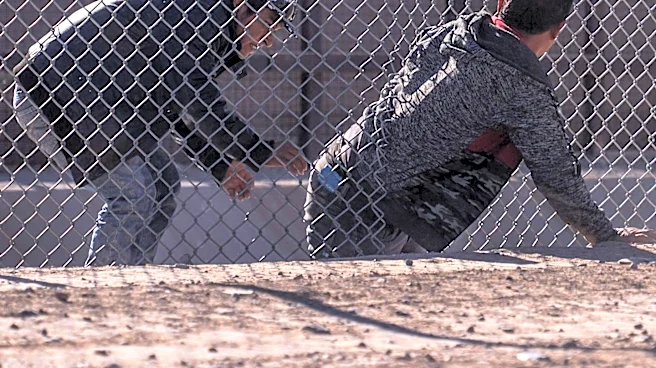
Two individuals, one Kosovar and one Montenegrin, were arrested on Sunday at midnight for illegally crossing the border between Serbia and Kosovo. The incident occurred on the 'Koshuticë' road near the Jarinje border crossing. According to a 24-hour report,
a case has been initiated against both suspects for unauthorized border crossing. The prosecutor has decided that the case will be processed through regular procedure. This event highlights ongoing border control efforts and the legal consequences for unauthorized crossings in the region. The Jarinje crossing is one of several joint crossing points established under the Agreement on Integrated Border/Boundary Management signed in 2011, which aims to regulate movement and enhance security along the Serbia-Kosovo boundary.
Why It's Important?
The detention of individuals for illegal border crossing between Serbia and Kosovo underscores the persistent challenges in managing this sensitive boundary. While the immediate impact is on the individuals involved, such incidents reflect broader issues of regional stability and adherence to international agreements. The 2011 Agreement on Integrated Border/Boundary Management was a significant step towards normalizing relations and facilitating legitimate movement, but unauthorized crossings indicate that full compliance and control remain complex. For the U.S. and its allies, stability in the Western Balkans is a strategic interest, and incidents like this can be indicators of underlying tensions or vulnerabilities that could potentially escalate. Effective border management is crucial for preventing illicit activities and maintaining regional security, which in turn supports broader diplomatic efforts to foster peace and cooperation in the area.
What's Next?
Following the prosecutor's decision, the case against the Kosovar and Montenegrin suspects will proceed through regular legal channels. This will likely involve further investigation, potential charges, and judicial proceedings in accordance with the laws governing unauthorized border crossings. Authorities will continue to monitor and enforce border regulations at crossing points like Jarinje. The incident may prompt increased vigilance and potentially enhanced security measures at the Serbia-Kosovo border to deter future illegal crossings. Diplomatic efforts to further normalize relations between Serbia and Kosovo, which include discussions on border management, are expected to continue. The outcome of this case could also serve as a precedent or deterrent for others contemplating unauthorized border movements in the region.
Beyond the Headlines
The illegal crossing incident, while seemingly minor, touches upon deeper geopolitical and humanitarian dimensions in the Western Balkans. The Serbia-Kosovo border is not merely a line on a map but a symbol of unresolved political status and historical grievances. Unauthorized crossings can be driven by various factors, including economic hardship, attempts to circumvent official channels, or even organized illicit activities. The legal processing of these individuals highlights the ongoing efforts to establish rule of law in a region still grappling with the aftermath of conflict and political division. The involvement of a Montenegrin citizen also points to the interconnectedness of regional security and migration patterns. The broader implications include the effectiveness of regional security cooperation, the challenges of managing migration flows, and the continuous need for diplomatic engagement to address the root causes of instability and ensure human rights are upheld during enforcement actions.