
What's Happening?
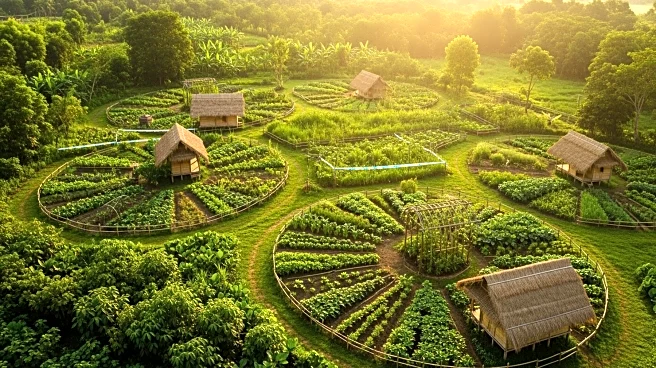
A new scenario for global climate restoration has been proposed, focusing on the transition to ecovillages and organic agriculture. This approach suggests that converting global agriculture to organic methods
could significantly reduce greenhouse gas emissions. The proposal highlights the potential of ecovillages to support sustainable living and agriculture, emphasizing the need for systemic change in land use and food production. The scenario argues for a shift from conventional agriculture to organic practices, which could lead to substantial carbon sequestration and contribute to achieving global sustainability goals.
Why It's Important?
The proposed shift to ecovillages and organic agriculture represents a significant departure from current agricultural practices, which are major contributors to greenhouse gas emissions. By adopting organic methods, the potential for reducing emissions and enhancing carbon sequestration is substantial. This approach aligns with global sustainability goals and offers a pathway to mitigate climate change impacts. The transition could also promote biodiversity, improve soil health, and support local economies, making it a multifaceted solution to environmental challenges.
What's Next?
The implementation of this scenario would require unprecedented global coordination and policy support. Key stakeholders, including governments, agricultural organizations, and environmental groups, would need to collaborate to facilitate the transition. The success of this initiative depends on widespread adoption of organic practices and the establishment of ecovillages as models for sustainable living. Future discussions and policy decisions will likely focus on the feasibility and scalability of this approach, as well as its integration into existing climate strategies.