







What's Happening?
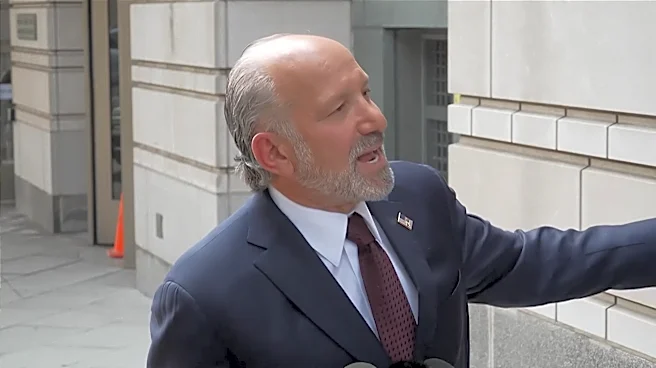
Representative Ritchie Torres (D-NY) has publicly condemned Palestinian journalist Rula Jebreal's use of a racial slur against House Minority Leader Hakeem Jeffries (D-NY). Jebreal referred to Jeffries as an 'AIPAC monkey' during an appearance on Wajahat
Ali’s 'The Left Hook' podcast, while criticizing Jeffries' support for Israel. Torres, in an X post, stated that 'calling a Black man a 'monkey' is racist. Full stop.' He further highlighted a perceived double standard, suggesting that if Jebreal and Ali were on the far right, their comments dehumanizing a Black man in racist terms would be readily condemned by the far left. The Congressional Black Caucus (CBC) also rejected Jebreal's defense, asserting that there is no non-racist way to use such language. Jebreal later issued an apology on X, acknowledging that the term she used was inappropriate and offensive.
Why It's Important?
This incident underscores the ongoing challenges of combating anti-Black racism across the political spectrum and highlights the sensitivity surrounding language used in political discourse. Representative Torres's strong condemnation, alongside that of the Congressional Black Caucus, emphasizes the zero-tolerance stance against racial slurs, regardless of the speaker's intent or political alignment. The controversy also brings to light the intersection of foreign policy debates, particularly regarding U.S.-Israel relations, and domestic issues of race and identity. The swift and unified response from Black lawmakers signals a clear message that such dehumanizing language will not be tolerated, reinforcing the importance of respectful and inclusive dialogue in American politics. The incident also raises questions about accountability for public figures and media platforms in addressing and preventing the spread of racist rhetoric.
What's Next?
Following Rula Jebreal's apology, the immediate focus will likely be on how this incident impacts future political discourse and media engagement. There may be increased scrutiny on commentators and journalists to ensure their language adheres to standards of respect and non-discrimination, particularly when discussing sensitive topics. Political leaders and organizations may continue to emphasize the importance of combating anti-Black racism and promoting civility in public conversations. The incident could also prompt further discussions within media circles about the responsibility of hosts and platforms to intervene when guests use offensive language. The long-term implications might include a renewed push for greater awareness and education on the historical and social impact of racial slurs, aiming to prevent similar incidents in the future.
Beyond the Headlines
Beyond the immediate controversy, this event touches upon deeper societal issues concerning the weaponization of language and the persistence of racial stereotypes in public discourse. The use of 'monkey' as a derogatory term for Black individuals carries a painful history rooted in dehumanization and systemic racism, making its deployment particularly egregious. The incident also highlights the complexities of political alliances and criticisms, where legitimate policy disagreements can sometimes devolve into racially charged attacks. It prompts a broader reflection on how different communities perceive and react to such language, and the varying degrees of accountability expected from individuals across the political spectrum. This event serves as a stark reminder that even in contemporary political debates, the fight against racial prejudice remains a critical and ongoing endeavor, requiring constant vigilance and unequivocal condemnation.