



What's Happening?
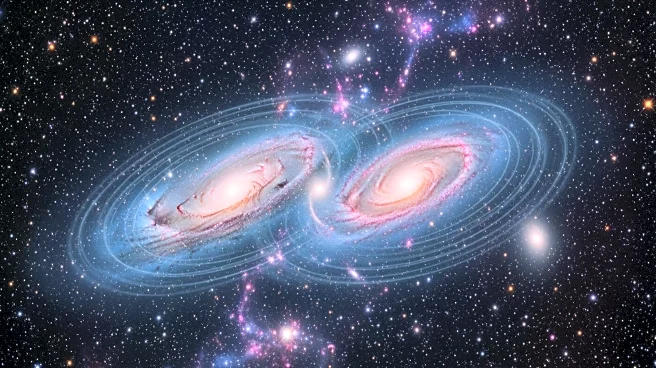
NASA's Hubble Space Telescope has captured a striking image of the Bullseye Galaxy, also known as LEDA 1313424. This image, part of the 2025 Space Telescope Advent Calendar, shows the aftermath of a cosmic collision. Scientists believe that a smaller
blue galaxy collided with the Bullseye Galaxy approximately 50 million years ago. This event created massive rings, similar to ripples in a pond, which are visible in the image. The photograph is part of a series of daily releases leading up to December 25, showcasing various celestial phenomena.
Why It's Important?
The image of the Bullseye Galaxy provides valuable insights into the dynamics of galactic collisions and their long-term effects. Such events are crucial for understanding the evolution of galaxies and the universe. The ripples observed in the Bullseye Galaxy offer a rare opportunity to study the impact of such collisions on galactic structure and star formation. This knowledge can enhance our understanding of cosmic history and the forces shaping the universe. The Hubble Space Telescope continues to be an essential tool for astronomers, offering detailed observations that ground-based telescopes cannot achieve.
What's Next?
As the 2025 Space Telescope Advent Calendar continues, more images will be released, each offering a glimpse into different aspects of the universe. These images will likely include other significant astronomical phenomena, contributing to ongoing research and public interest in space exploration. The data collected from these images will be analyzed by scientists to further understand the processes governing the cosmos. Additionally, the upcoming launch of the James Webb Space Telescope is expected to complement Hubble's findings with even more detailed observations.
Beyond the Headlines
The release of these images not only advances scientific knowledge but also engages the public with the wonders of space. The advent calendar format creates anticipation and excitement, drawing attention to the importance of space exploration and research. This initiative highlights the role of international collaboration in space science, as the Hubble Space Telescope is a joint project of NASA and the European Space Agency. Such collaborations are vital for pooling resources and expertise to tackle complex scientific questions.