





What's Happening?
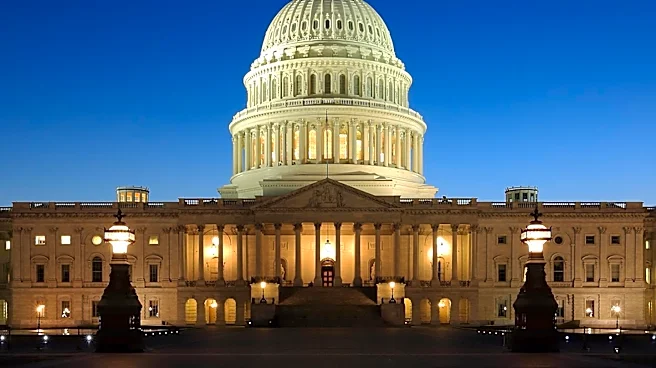
The US Senate has unanimously passed a resolution opposing any presidential pardon for Ghislaine Maxwell, who is serving a 20-year prison sentence for sex-trafficking crimes related to Jeffrey Epstein. The resolution, introduced by Senator Jacky Rosen,
states that Maxwell should not be granted a presidential pardon or any form of clemency for her crimes involving the sexual exploitation and abuse of minors. This decision follows Maxwell's invocation of her Fifth Amendment rights during a congressional deposition earlier this year, where she refused to answer questions unless granted clemency. The resolution is symbolic and non-binding but aims to put the Senate on record against any potential clemency for Maxwell.
Why It's Important?
The Senate's resolution reflects a strong stance against granting clemency to individuals involved in serious crimes such as sex trafficking. It underscores the importance of accountability and justice for victims of sexual exploitation. The resolution also highlights the political and public pressure on the administration to uphold justice and avoid any perception of leniency towards high-profile offenders. This move may influence public opinion and policy decisions regarding the handling of similar cases in the future, reinforcing the message that crimes against minors will not be tolerated.
What's Next?
While the resolution is non-binding, it sends a clear message to the White House and the Department of Justice about the Senate's position on the matter. The administration may face increased scrutiny and pressure to ensure that no special treatment is given to Maxwell. Additionally, the resolution could impact ongoing investigations and legal proceedings related to Epstein's network, as it emphasizes the need for transparency and justice. The resolution may also influence future legislative actions aimed at strengthening laws against sex trafficking and exploitation.