
What's Happening?
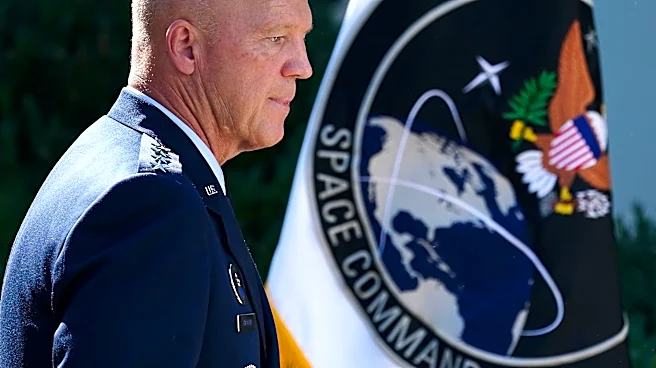
U.S. Space Command conducted the Apollo Maneuvers 2026 exercise in September 2026, a critical step in enhancing space deterrence and operational coordination. This exercise involved multinational participants
from Operation Olympic Defender and commercial partners, practicing coordinated activities across low, medium, and geosynchronous Earth orbits. The primary goal was to advance maneuver warfare and contested-logistics concepts in space. The exercise aimed to test the ability of spacecraft to move for strategic advantage and to assess whether multiple independently controlled spacecraft could make compatible decisions under pressure. This initiative comes in response to incidents like Russia's Cosmos 2612 approaching an ICEYE satellite, highlighting the need for allied spacecraft to maneuver defensively without creating new hazards or confusion among friendly operators. The exercise also sought to address the challenge of orbital uncertainty, which can be used as a tool of coercion by adversaries.
Why It's Important?
The Apollo Maneuvers 2026 exercise is crucial for U.S. national security and its allies as it directly addresses the evolving threats in space. The ability to maneuver decisively and in a coordinated manner is becoming a key form of deterrence by resilience, making satellites harder to target. However, uncoordinated movements can consume fuel, interrupt services, create close approaches, and be misinterpreted as aggressive actions. This exercise aims to establish robust coordination protocols to prevent such scenarios, ensuring that defensive maneuvers protect both the mission and the vehicle. By improving maneuver-intent coordination, the U.S. and its allies can present a more credible deterrent, reducing the risk of accidental collisions or escalations due to miscommunication or independent evasive actions. This is vital for maintaining superiority in a contested space domain and protecting critical space assets that support military operations and civilian infrastructure.
What's Next?
U.S. Space Command is expected to integrate maneuver-intent coordination as a distinct objective within future Operation Olympic Defender exercises. This will involve allied and participating commercial operators sharing minimal, protected status records for actions that could affect one another, distinguishing between proposed, authorized, executing, and completed maneuvers. Future tests will likely focus on more complex scenarios, including adversarial but controlled coordination drills with conflicting maneuver plans, stale tracking data, communication breaks, and false warnings. The goal is to measure unresolved conflicts, detection times for disagreements, avoidable fuel use, interrupted missions, and legitimate protective actions blocked by coordination rules. Establishing these safeguards is intended to strengthen deterrence by making allied actions interpretable without revealing classified mission objectives to adversaries, ensuring that a coalition can move effectively without self-inflicted vulnerabilities.
Beyond the Headlines
The implications of enhanced space maneuver coordination extend beyond immediate military advantages. It sets a precedent for responsible behavior in space, potentially influencing international norms for space operations. The development of clear communication protocols and shared status records could mitigate the risk of miscalculation and unintended conflict in an increasingly crowded and contested orbital environment. Furthermore, the integration of commercial partners in such exercises highlights the growing importance of private sector capabilities in national security space endeavors. This collaboration could foster innovation in space traffic management and collision avoidance technologies, benefiting both military and civilian space activities. The ethical dimension of maneuver warfare also comes into play, as the ability to move decisively must be balanced with the responsibility to ensure space safety and stability for all users, preventing the weaponization of orbital uncertainty.