






What's Happening?
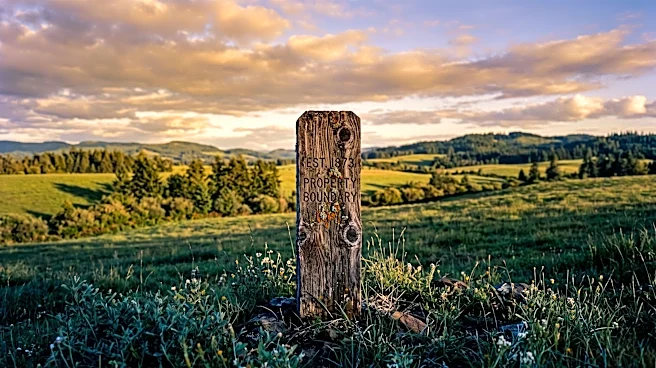
The Letitia Carson Legacy Project recently hosted its Fruit & Forage Field Day at Oregon State University’s Soap Creek Beef Ranch, north of Corvallis. This initiative brings visitors to the land where Letitia Carson, one of Oregon's earliest Black pioneers,
lived and raised her family in the mid-1800s. The project, a collaboration between OSU and four Black-led organizations including Oregon Black Pioneers and the Black Oregon Land Trust, aims to interpret Carson's life, explore the Indigenous history of the land, and discuss its ongoing agricultural use and potential for education and stewardship. Zachary Stocks, executive director of Oregon Black Pioneers, emphasizes the project's role in revealing overlooked historical narratives. Letitia Carson, born into slavery between 1814 and 1818, traveled the Oregon Trail in 1845. After her partner David Carson died in 1852, she was initially denied inheritance but successfully won two lawsuits to receive compensation for her labor and the illegal sale of her cattle. She later became the earliest known Black person in the U.S. to receive a homestead patent under the 1862 law, claiming 154 acres in 1863.
Why It's Important?
This project is important because it sheds light on a crucial, often overlooked, aspect of U.S. history, particularly in the Pacific Northwest. By highlighting Letitia Carson's story, it challenges conventional narratives of westward expansion and pioneer life, demonstrating the resilience and contributions of Black individuals in shaping the nation. Carson's legal battles and successful homesteading efforts underscore the systemic racial inequalities of the era and her remarkable determination to overcome them. The initiative also fosters a deeper understanding of land history by integrating Indigenous perspectives and the ongoing agricultural significance of the area. This multi-faceted approach enriches public education, promotes historical accuracy, and encourages community engagement with the land's past and present. It serves as a powerful reminder that historical narratives are often incomplete without the inclusion of diverse voices and experiences, impacting how current generations understand identity, land ownership, and justice.
What's Next?
The Letitia Carson Legacy Project plans to continue its efforts in historical interpretation, education, and land stewardship. Future activities include further archaeological work, hosting annual symposiums, and developing educational programs for school and university groups. The project is also considering how best to care for the land, particularly in areas where native plants like camas have re-emerged, and will continue to involve local tribes in these discussions. The collaboration between Oregon State University and Black-led organizations is expected to strengthen, potentially expanding the project's reach and impact. The goal is to make this history more tangible and accessible, ensuring that Carson's legacy and the broader narratives of Black and Indigenous peoples in Oregon are integrated into public consciousness. The project also aims to explore the property's potential for agricultural research, climate-resilient ranching, and public education, aligning with OSU's land-grant mission.
Beyond the Headlines
Beyond the immediate historical revelations, the Letitia Carson Legacy Project has profound ethical and cultural implications. It addresses the long-standing issue of historical erasure, particularly concerning the contributions and struggles of marginalized communities. By bringing these stories to the forefront, the project encourages a more inclusive and accurate understanding of American history, fostering empathy and critical thinking about historical injustices. The integration of Indigenous history and land stewardship practices highlights the interconnectedness of human history and environmental well-being, promoting a holistic view of heritage. The project also serves as a model for how academic institutions and community organizations can collaborate to uncover and interpret complex historical narratives, making history tangible and relevant for contemporary audiences. This initiative contributes to a broader cultural shift towards acknowledging and celebrating the diverse tapestry of American experiences, influencing public discourse on race, land rights, and historical memory.