






What's Happening?
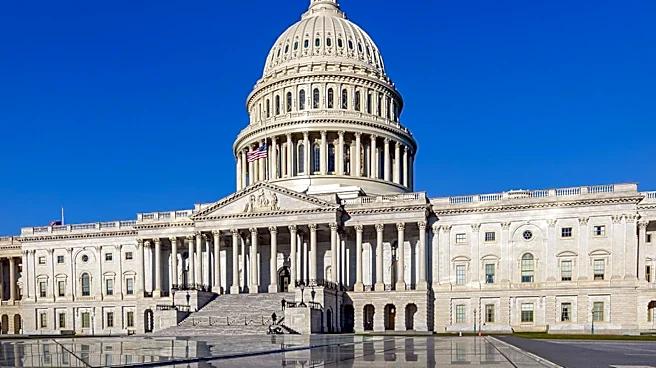
Ways and Means Committee Chairman Jason Smith (MO-08) delivered a statement in the U.S. House of Representatives, advocating for the reauthorization of the Haitian Hemispheric Opportunity through Partnership Encouragement Act (HOPE) and the Haiti Economic
Lift Program Act (HELP). These programs provide trade preferences for textile and apparel products from Haiti. Chairman Smith emphasized that these reauthorizations are crucial for advancing America's strategic and national security interests. He highlighted that greater stability in Haiti, a nation less than 600 miles from the Florida coast, directly translates to fewer regional security concerns for the United States. The current legislation ensures that both HOPE and HELP will remain in effect through the end of 2028, allowing time for committees and stakeholders to consider reforms and updates.
Why It's Important?
The reauthorization of HOPE and HELP is significant for both U.S. economic and national security interests. By providing trade preferences, these programs aim to foster economic stability and opportunity in Haiti, a country that has long experienced political and economic upheaval. This stability is viewed as a direct contributor to U.S. national security by reducing regional instability and potential migration pressures. For the U.S. textile and apparel industries, these programs facilitate trade relationships and potentially diversify supply chains. The extension through 2028 provides a crucial window for evaluating and refining these policies to ensure their continued effectiveness in promoting U.S. interests and supporting Haiti's economic development.
What's Next?
With the current legislation ensuring the reauthorization of HOPE and HELP through the end of 2028, the Ways and Means Committee and other stakeholders will have time to review and potentially reform these programs. This period will likely involve discussions on how to optimize the trade preferences to maximize their impact on Haiti's stability and U.S. strategic interests. Future legislative efforts may focus on updating the acts to address evolving economic and geopolitical landscapes. The ongoing political and economic situation in Haiti will undoubtedly influence these considerations, as policymakers seek to ensure the programs remain relevant and effective in achieving their stated goals.
Beyond the Headlines
The reauthorization of these trade programs reflects a broader U.S. foreign policy strategy that links economic development in neighboring countries to American national security. It underscores the understanding that instability in regions close to the U.S. can have direct implications for domestic security and economic well-being. This approach also highlights the role of trade as a tool for diplomacy and stability, rather than solely for economic gain. The focus on textile and apparel products suggests an effort to support specific industries in Haiti that can provide employment and contribute to economic growth. The long-term success of these programs will depend on their ability to genuinely foster sustainable development and resilience in Haiti, thereby reducing the need for future interventions and mitigating regional security risks.