







What's Happening?
The Internal Revenue Service (IRS) is issuing a warning to taxpayers regarding penalties for attempting to pay taxes without sufficient funds in their bank accounts. This penalty, known as the Dishonored Check or Other Form of Payment Penalty, is applied
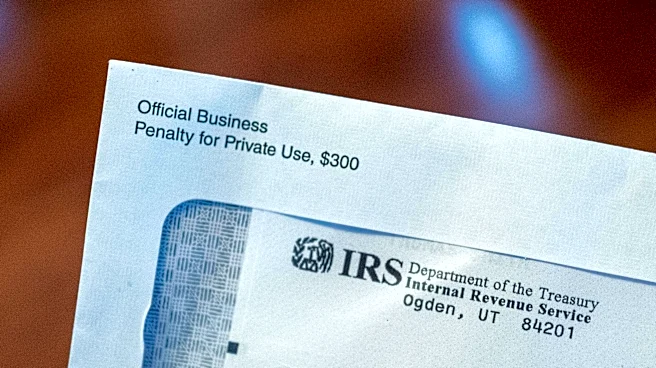
when a payment, whether by check or electronic transfer, is rejected by the bank due to insufficient funds. When such a payment is dishonored, the bank reports the unpaid amount to the IRS. If a penalty is imposed, taxpayers will incur an additional charge calculated based on the amount they attempted to pay without adequate funds. The IRS will notify taxpayers with an official notice once the penalty is applied. This measure aims to ensure that tax payments are processed successfully and to deter attempts to pay with insufficient funds.
Why It's Important?
This IRS policy is crucial for maintaining the integrity of the tax payment system and ensuring timely revenue collection. For taxpayers, understanding this penalty is vital to avoid unexpected additional costs and potential interest accrual. The penalty structure, which is either $25 or the amount due (whichever is less) for amounts under $1,250, and 2% of the amount owed for amounts over $1,250, can significantly increase a taxpayer's financial burden. Furthermore, if the original tax amount and the penalty are not paid promptly, the IRS will add interest, further escalating the total debt. This emphasizes the importance of verifying account balances before initiating tax payments to prevent financial repercussions.
What's Next?
Taxpayers who incur this penalty will receive an official notice from the IRS detailing the additional charges. If the penalty and original tax are not paid on time, interest will begin to accrue, increasing the total amount owed. However, the IRS does provide a mechanism for penalty reduction or waiver. Taxpayers can submit a written statement explaining why the penalty should be reconsidered, providing evidence that they had a reasonable basis for believing sufficient funds were available. This statement, along with supporting documents, should be mailed to the address provided in the IRS notice. The IRS will then review the submission and inform the taxpayer of its decision.
Beyond the Headlines
The IRS's enforcement of penalties for insufficient funds on tax payments highlights a broader issue of financial literacy and planning among taxpayers. While seemingly straightforward, the act of attempting a payment without adequate funds can stem from various circumstances, including oversight, miscalculation, or genuine financial distress. This policy, while necessary for revenue collection, also underscores the need for taxpayers to meticulously manage their finances, especially around tax deadlines. It implicitly encourages proactive financial planning and regular monitoring of bank balances to avoid such penalties. Furthermore, the provision for penalty waiver based on 'reasonable cause' suggests a recognition by the IRS that genuine errors can occur, offering a pathway for taxpayers to appeal under specific circumstances.