
What's Happening?
The Heritage Crime Task Force (HCTF), established by the Organisation for Security and Co-operation in Europe (OSCE), is actively involved in recovering and repatriating stolen cultural artifacts. Recently,
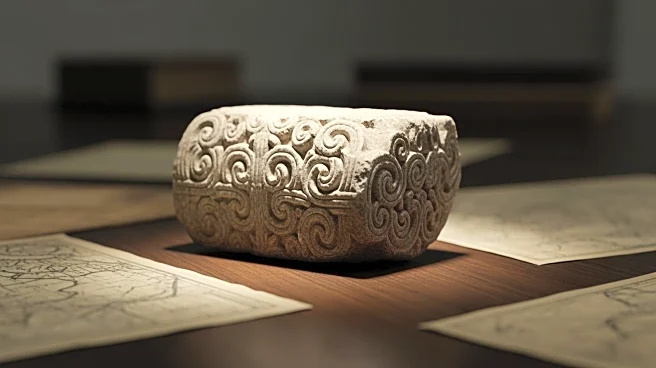
the London Metropolitan Police collaborated with the HCTF to process a large collection of antiquities, including statues and friezes, believed to originate from regions such as Cambodia, Pakistan, Afghanistan, and the Indus Valley. The task force, which includes members from U.S. Homeland Security Investigations, focuses on training law enforcement and heritage professionals to combat art and antiquities trafficking. This initiative has led to significant recoveries, including a recent interception of smuggled artworks by Ukrainian authorities, attributed to HCTF training.
Why It's Important?
The work of the HCTF is crucial in preserving cultural heritage and preventing the illicit trade of art and antiquities, which is often linked to organized crime and terrorism. The U.S., as the largest art market globally, plays a significant role in these efforts. The task force's training programs enhance the capabilities of law enforcement agencies worldwide, leading to successful recoveries and repatriations. This not only helps in preserving cultural heritage but also strengthens international cooperation against criminal networks. The ongoing efforts highlight the importance of global collaboration in addressing cultural property crimes.
What's Next?
The HCTF will continue its efforts to trace the origins of the recovered artifacts and work towards their repatriation. This process involves extensive forensic analysis and collaboration with international experts. The task force aims to expand its training programs and strengthen cross-border intelligence partnerships. Additionally, there is a push for stronger international regulations to prevent the entry of illicit cultural artifacts into the market. The success of these initiatives could lead to more stringent measures and increased awareness about the importance of protecting cultural heritage.
Beyond the Headlines
The recovery and repatriation of cultural artifacts have broader implications for international relations and cultural diplomacy. Successful repatriations can strengthen ties between countries and promote mutual respect for cultural heritage. However, challenges remain, such as the need for better regulation and the high burden of proof required in legal proceedings. The task force's work also highlights the ethical responsibility of museums and collectors to ensure the provenance of their acquisitions. As awareness grows, there may be increased pressure on the art market to adopt more transparent practices.