
What's Happening?
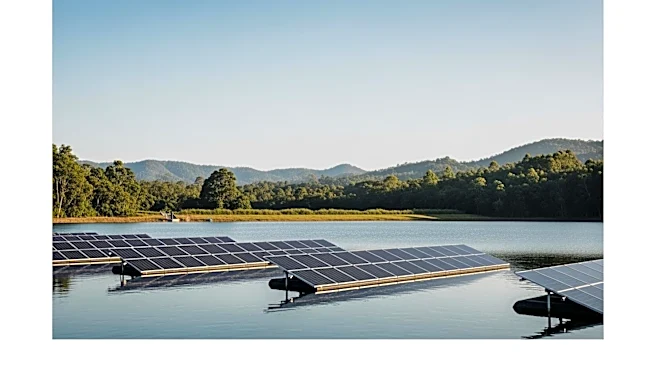
In Lima, Ohio, a significant shift towards renewable energy is underway with the installation of over 3,400 solar arrays on the Twin Lake Reservoir. This floating solar project, managed by D3Energy, is designed
to power a nearby water treatment plant, which is one of the city's largest energy consumers. The initiative is part of a broader movement in the industrial Midwest to transition from heavy manufacturing to clean energy solutions. The project is expected to stabilize water rates by reducing energy costs and is estimated to save the city and taxpayers around $10 million over its lifetime. The solar arrays also provide environmental benefits by reducing evaporation rates and algae growth in the reservoir.
Why It's Important?
The floating solar project in Lima represents a critical development in addressing the region's energy crisis, driven by rising utility costs and geopolitical tensions affecting oil prices. By utilizing water surfaces for solar energy, the project avoids competition with agricultural land, a vital component of the local economy. This approach not only supports energy independence but also offers a sustainable solution to meet increasing electricity demands. The success of such projects could encourage further adoption of renewable energy in the Midwest, potentially reducing reliance on fossil fuels and mitigating the impact of energy price fluctuations on consumers.
What's Next?
As the project nears completion, it is expected to serve as a model for similar initiatives across the Midwest, particularly in states with abundant water resources. The ongoing development of solar technology, such as the advancements by First Solar in Ohio, could further enhance the efficiency and appeal of solar energy. However, challenges remain, including overcoming public skepticism and addressing the financial implications of transmission and distribution fees. Stakeholders, including local governments and energy companies, will need to collaborate to ensure the long-term viability and acceptance of solar projects in the region.
Beyond the Headlines
The transition to renewable energy in the Midwest also highlights broader societal and economic shifts. As traditional industries face decline, renewable energy offers new opportunities for economic growth and job creation. However, the integration of solar projects into rural communities requires careful consideration of local concerns and the provision of clear, independent guidance to landowners. The success of these projects could influence national energy policies and contribute to a more sustainable and resilient energy infrastructure.