





What's Happening?
Bitcoin experienced a significant surge, jumping approximately 20% from $64,500 to $77,050 in less than 48 hours. This rapid increase was initially sparked by a macroeconomic catalyst: the U.S. Treasury's announcement to double the maximum size of certain
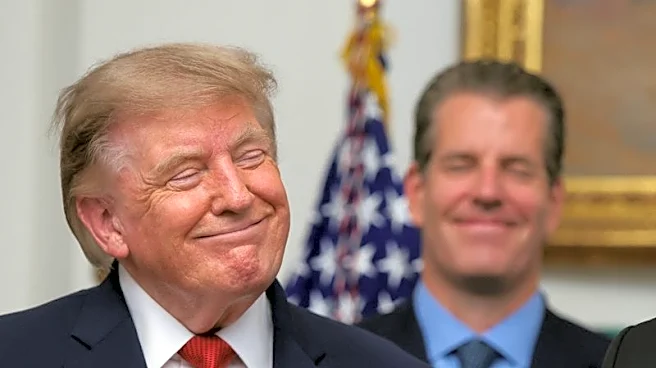
long-dated bond buyback operations to $4 billion, aiming to improve Treasury-market liquidity. This move, which included plans for up to $38 billion of off-the-run securities purchases, led to lower bond yields and a weaker dollar, creating a more favorable environment for risk-sensitive assets like Bitcoin. The rally was further amplified by a short squeeze, where over $3.1 billion in crypto short positions were liquidated, forcing traders betting against Bitcoin to buy the asset to cover their positions, thereby driving prices even higher. President Trump added another significant catalyst by urging Congress to pass the Digital Asset Market Clarity Act during a White House meeting with cryptocurrency executives on August 19. This legislation aims to establish clearer definitions for digital assets and determine the federal agencies responsible for their oversight, with a Senate vote scheduled for September 15.
Why It's Important?
The push for the Digital Asset Market Clarity Act by President Trump signifies a potential shift in the regulatory landscape for cryptocurrencies in the U.S. Clearer definitions and established oversight could provide much-needed legal certainty for digital asset businesses and investors, potentially fostering greater institutional adoption and innovation within the sector. This regulatory clarity could mitigate risks associated with the current ambiguous legal status of many digital assets, which has been a significant barrier to mainstream integration. For the U.S. economy, a well-defined regulatory framework could attract more investment and talent, positioning the country as a leader in the evolving digital economy. Conversely, a lack of clear regulation has often led to market volatility and uncertainty, deterring traditional financial institutions from fully engaging with cryptocurrencies. The proposed legislation could also influence global regulatory approaches, as other nations often look to U.S. policy for guidance in emerging financial technologies. The market's reaction to President Trump's endorsement highlights the significant impact of political and regulatory developments on cryptocurrency valuations and investor sentiment.
What's Next?
The immediate next step is the scheduled Senate vote on the Digital Asset Market Clarity Act on September 15. The outcome of this vote will be crucial in determining the future regulatory environment for digital assets in the U.S. If passed, the legislation would likely lead to a period of adjustment for cryptocurrency exchanges, investors, and developers as they adapt to the new definitions and oversight structures. This could involve new compliance requirements and reporting standards. The market will closely watch for further statements or actions from the White House and Congress regarding digital asset regulation. The sustainability of Bitcoin's recent rally will depend on whether genuine spot demand, potentially driven by increased regulatory clarity and institutional interest, can continue to support prices now that the short squeeze has largely subsided. The performance of spot Bitcoin ETFs, which saw $606 million in inflows on Thursday, will be a key indicator of this underlying demand. Further macroeconomic developments and their impact on bond yields and the dollar will also continue to influence Bitcoin's price trajectory.
Beyond the Headlines
The broader implications of the Digital Asset Market Clarity Act extend beyond immediate market movements. This legislative effort could represent a significant step towards integrating digital assets into the traditional financial system, potentially legitimizing cryptocurrencies in the eyes of a wider public and institutional investors. The establishment of clear regulatory boundaries could also address concerns about illicit activities and consumer protection, which have been major points of contention for policymakers. Ethically, the legislation could set precedents for how new technologies are governed, balancing innovation with oversight. Culturally, it could accelerate the mainstream acceptance of digital currencies as a legitimate asset class, influencing financial literacy and investment behaviors. In the long term, a robust and clear regulatory framework could foster a more stable and predictable environment for the development of blockchain technology and decentralized finance, potentially unlocking new economic opportunities and reshaping aspects of global commerce and financial services. The debate surrounding this act will also highlight the ongoing tension between regulatory control and the decentralized ethos of cryptocurrencies.