




What's Happening?
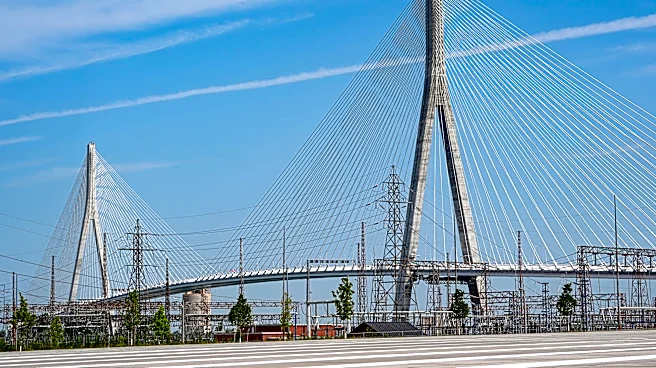
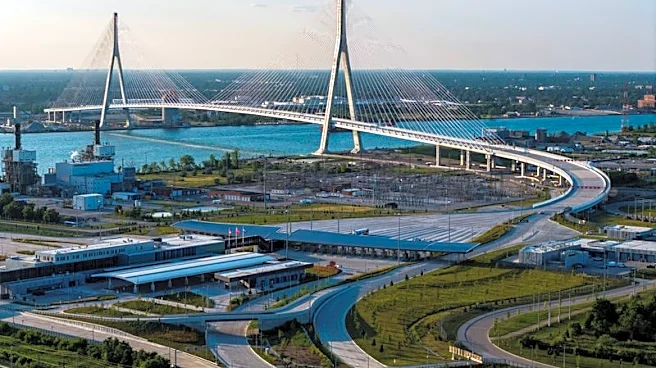
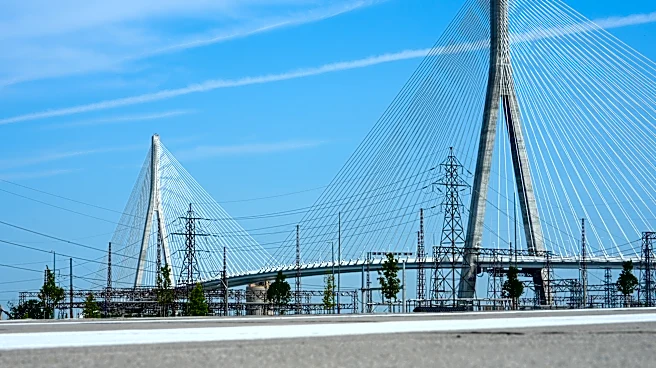
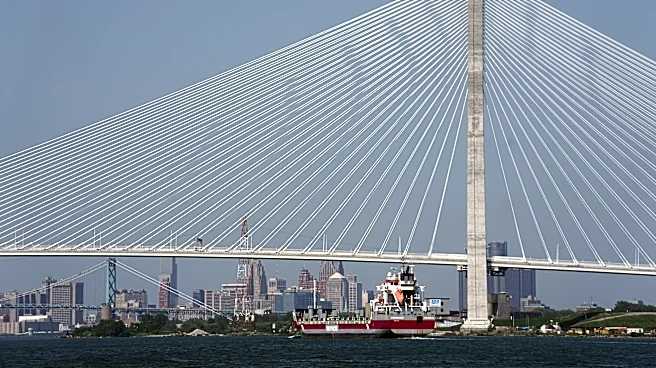
The Gordie Howe International Bridge, a significant infrastructure project connecting Detroit, Michigan, and Windsor, Ontario, is set to open to traffic on July 27, 2026. This $4.7 billion project, largely funded by Canada, is named after the legendary
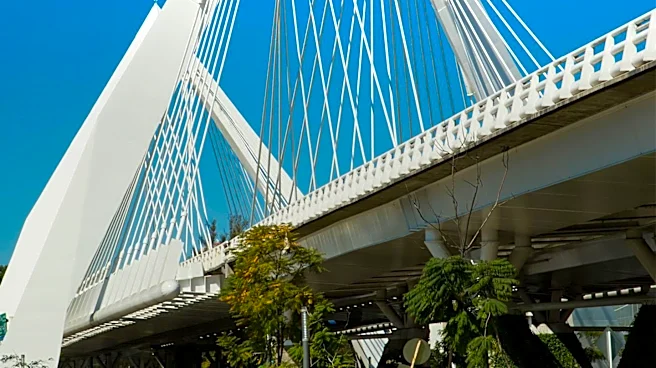
hockey player Gordie Howe. The bridge features six lanes for vehicles, 16 toll lanes, and 60 inspection lanes, making it the longest cable-stayed bridge in North America. Construction began in 2018, and the bridge is expected to facilitate smoother trade and travel between the U.S. and Canada. The bridge will provide direct access to major highways in both countries, reducing the need for traffic to pass through city streets, which has been a concern for local residents.
Why It's Important?
The opening of the Gordie Howe International Bridge is a pivotal development for U.S.-Canada trade, as it provides an alternative to the nearly century-old Ambassador Bridge, which currently handles a significant portion of cross-border trucking shipments. The new bridge is expected to alleviate congestion and improve the efficiency of trade routes, which is crucial given that about one-third of all trade between the two countries passes through Detroit. This infrastructure project is seen as a major economic boon, potentially enhancing trade relations and economic growth in the region. Additionally, the bridge's design aims to address local traffic concerns by providing direct highway access, thus minimizing the impact on residential areas.
What's Next?
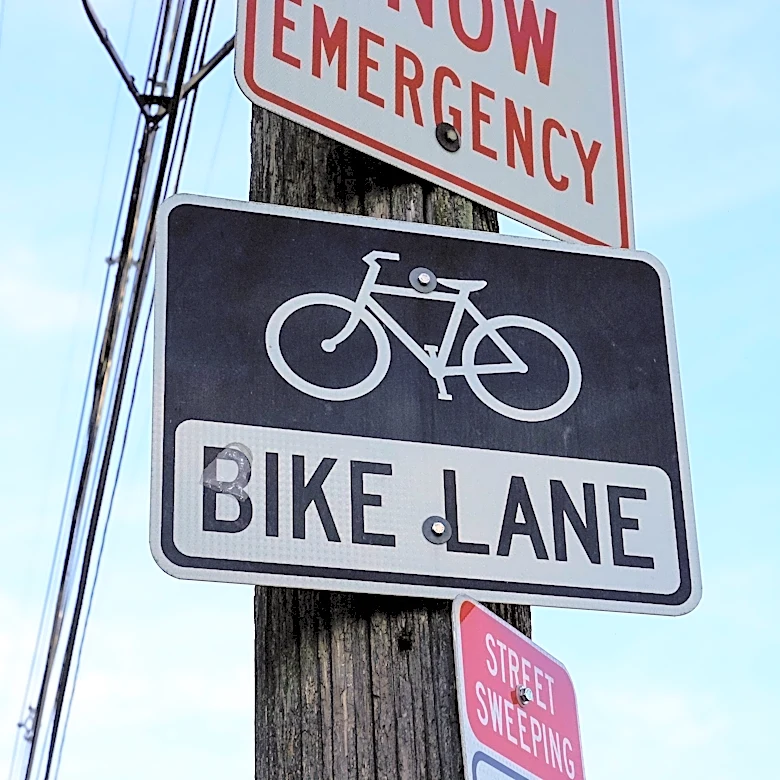
Following the opening of the Gordie Howe International Bridge, stakeholders will likely monitor its impact on trade and local traffic patterns. The bridge's toll-free multi-use path for pedestrians and cyclists is scheduled to open on August 5, 2026, further enhancing connectivity. Local and international businesses may adjust their logistics strategies to take advantage of the new route. Additionally, the bridge's operation will be closely observed to ensure it meets security and efficiency standards, given its designation as a port of entry by the Department of Homeland Security.