
What's Happening?
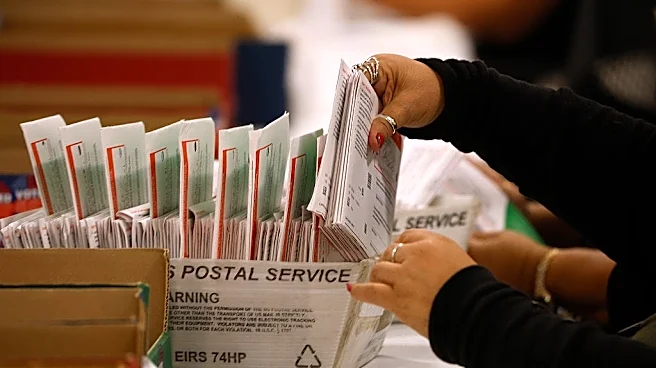
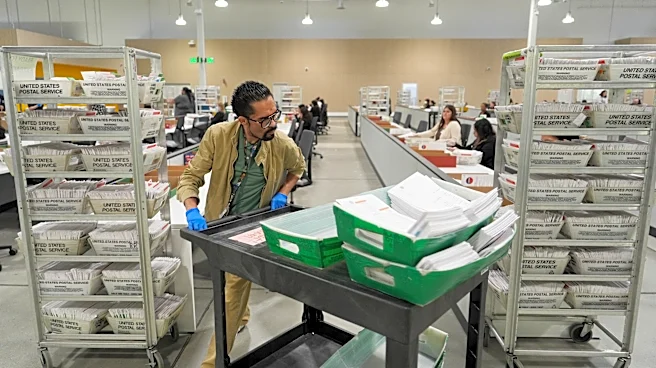
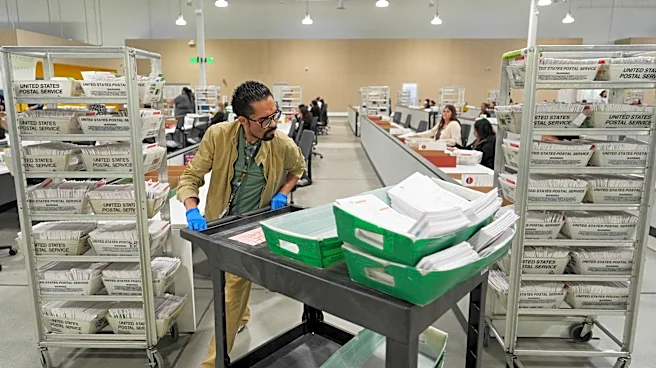
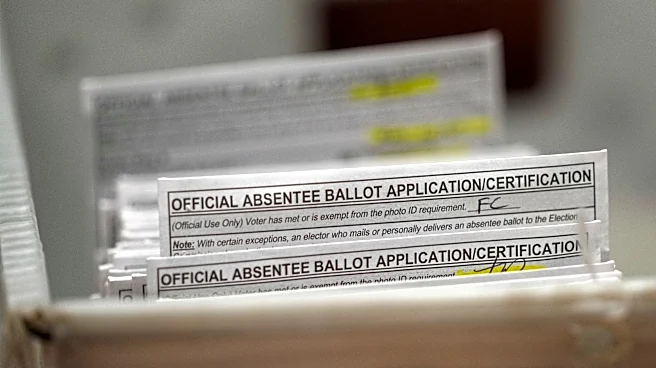
Nearly 150,000 mail-in ballots were rejected in California's June primary, marking a significant increase from previous elections. The primary reason for the rejections was late-arriving ballots, which
accounted for over 93,000 of the rejected votes. This issue has been attributed to changes in the U.S. Postal Service's processing procedures, which may delay postmarks. Despite efforts to make voting more accessible, such as allowing ballots to arrive up to seven days after Election Day if postmarked on time, the rejection rate has increased. Lawmakers have expressed concern over these postal changes, fearing they could impact future elections.
Why It's Important?
The increase in rejected mail ballots raises concerns about voter disenfranchisement and the effectiveness of mail-in voting systems. As mail voting becomes more popular, ensuring timely delivery and accurate processing is crucial for maintaining public trust in the electoral process. The situation highlights the need for reliable postal services, especially during election periods, to ensure that all votes are counted. The issue also underscores the potential impact of administrative changes on voter participation and election outcomes.
What's Next?
Lawmakers are likely to continue scrutinizing the U.S. Postal Service's procedures to prevent future delays in postmarking ballots. There may be calls for legislative or administrative changes to ensure that mail-in ballots are processed efficiently and accurately. Additionally, voter education campaigns may be necessary to encourage early mailing of ballots to avoid rejection due to lateness.