





What's Happening?
U.S. Customs and Border Protection (CBP) is actively recruiting for entry-level and mid-level Border Patrol Agents (BPAs) in Marfa, Texas, and other locations. This hiring initiative aims to bolster the ranks of one of the largest federal law enforcement
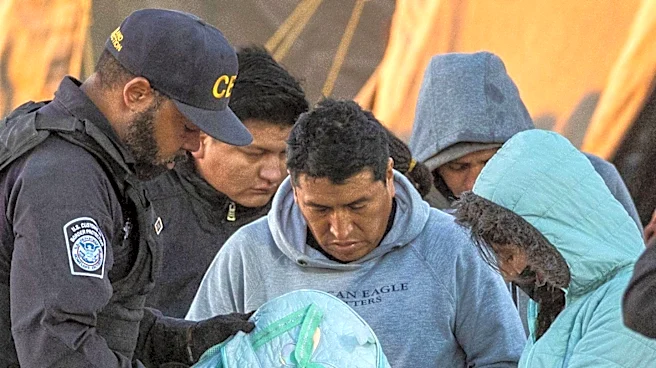
agencies within the Department of Homeland Security, which currently employs over 69,000 individuals. The roles involve critical duties such as detecting and questioning individuals suspected of violating immigration and customs laws, preventing and apprehending undocumented noncitizens and smugglers, and patrolling international boundaries using various assets like vehicles, horses, and watercraft. CBP is offering significant recruitment incentives, including up to $20,000 for new agents, with an additional $10,000 for those who select prioritized locations like Marfa, Texas. Furthermore, new agents may qualify for up to $30,000 in retention incentives distributed over three years. The positions offer competitive annual base salaries ranging from $51,632 to $124,717, along with federal employment benefits such as health and dental insurance, a generous leave program, and participation in the Thrift Savings Plan.
Why It's Important?
The urgent hiring of Border Patrol Agents, particularly in strategic locations like Marfa, Texas, underscores the U.S. government's ongoing efforts to enhance border security and control. The substantial recruitment and retention incentives highlight the critical need for personnel in these roles and the challenges associated with attracting and retaining qualified law enforcement officers in remote or high-demand areas. A strengthened Border Patrol directly impacts national security by preventing the entry of terrorists and their weapons, while also facilitating lawful international travel and trade. For local communities along the border, an increased presence of BPAs can lead to both perceived and actual improvements in security, but also potential shifts in community dynamics. The economic impact includes job creation and the injection of federal salaries and benefits into local economies, which can be particularly significant in smaller towns. The emphasis on Spanish language proficiency also points to the evolving linguistic demands of border enforcement.
What's Next?
CBP will continue to process applications for these positions, with selected candidates undergoing a rigorous six-month training program at the U.S. Border Patrol Academy in Artesia, New Mexico. This training will cover immigration and nationality laws, law enforcement operations, and Spanish language proficiency. Applicants will be evaluated based on their resumes and supporting documents, and those applying for GL-5 or GL-7 grade levels must pass the Border Patrol Agent Entrance Exam. The direct hire authority announcement means that all qualified applicants will be reviewed, with veterans and military spouses considered alongside other candidates. The ongoing recruitment efforts suggest a sustained focus on reinforcing border security, and the success of these incentives will likely be monitored to assess their effectiveness in addressing staffing needs in critical border sectors.
Beyond the Headlines
The recruitment drive for Border Patrol Agents reflects broader national discussions surrounding immigration policy, border management, and the role of federal law enforcement. The significant financial incentives offered for these positions, especially for prioritized locations, indicate the high-stakes nature of border security and the difficulties in staffing these roles. This situation also brings to light the complex interplay between national security imperatives, economic opportunities for individuals seeking federal employment, and the social fabric of border communities. The demand for agents proficient in Spanish highlights the multicultural and multilingual realities of border regions, emphasizing the need for cultural competency within law enforcement. The long-term implications could include a more robust and technologically advanced border enforcement apparatus, but also continued debate over the balance between enforcement and humanitarian considerations at the border.