


What's Happening?
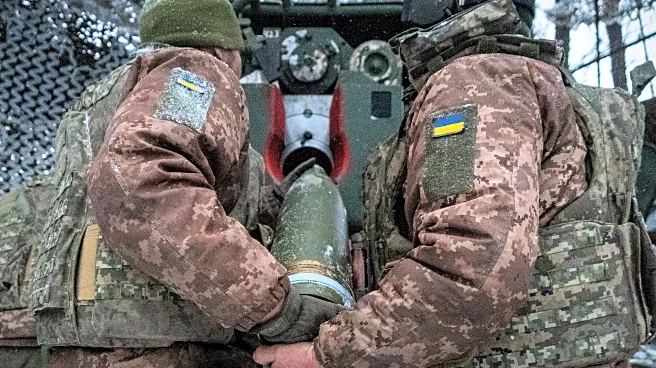
Vladimir Putin's objectives in Ukraine remain unfulfilled four years after the invasion, according to Ukrainian President Volodymyr Zelenskyy. Despite Russia's continued military efforts, Zelenskyy asserts that Ukraine has preserved its sovereignty and
is committed to achieving a lasting peace. Meanwhile, a report by the Centre for Research on Energy and Clean Air (Crea) reveals that Russia's oil exports are currently 6% higher than pre-invasion levels, despite Western sanctions. The report highlights that while the volume of exports has increased, revenues have decreased due to price discounts. The majority of Russian crude is being exported to China, India, and Turkey. The report calls for stricter enforcement of sanctions to address existing loopholes.
Why It's Important?
The ongoing conflict in Ukraine and Russia's ability to maintain high oil export volumes despite sanctions have significant implications for global geopolitics and energy markets. The increase in oil exports, despite reduced revenues, suggests that Russia is finding ways to circumvent sanctions, which could undermine Western efforts to pressure Moscow economically. This situation highlights the challenges in enforcing international sanctions and the need for coordinated global efforts to close loopholes. Additionally, the conflict's persistence underscores the resilience of Ukraine and its allies, as well as the geopolitical tensions within Europe, particularly with Hungary's recent actions blocking EU measures against Russia.
What's Next?
The international community is likely to continue efforts to tighten sanctions and close loopholes that allow Russia to maintain its oil export levels. European leaders may seek to address internal divisions, such as Hungary's opposition to new sanctions, to present a united front against Russia. Meanwhile, Ukraine will continue to seek military and financial support from its allies to sustain its defense and recovery efforts. The ongoing conflict and economic measures will remain a focal point in international relations, with potential impacts on global energy markets and diplomatic alliances.
Beyond the Headlines
The situation in Ukraine and Russia's economic maneuvers raise broader questions about the effectiveness of sanctions as a tool for international diplomacy. The ability of countries to adapt to and circumvent economic pressures could lead to a reevaluation of how sanctions are designed and implemented. Additionally, the conflict highlights the resilience of national economies under duress and the potential for innovation and adaptation in response to external threats. The geopolitical landscape in Europe may also shift as countries navigate the complex dynamics of supporting Ukraine while managing their own economic and political interests.