






What's Happening?
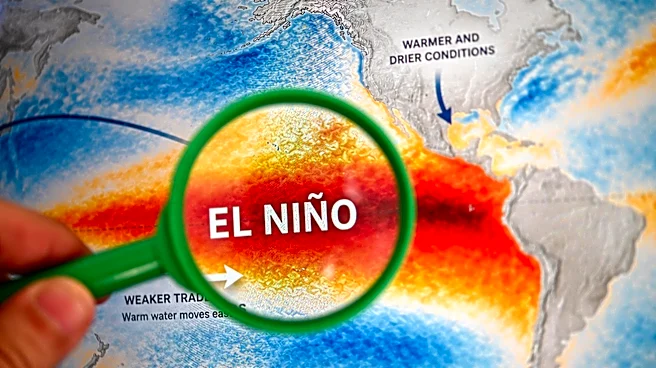
Economists are raising alarms about a 'super' El Niño weather cycle that could significantly impact global food prices until 2028. This weather phenomenon, characterized by changes in wind patterns and warmer water spreading across the Pacific, is expected
to exacerbate existing inflationary pressures caused by geopolitical tensions, such as the Iran war. The U.S. National Oceanic and Atmospheric Administration (NOAA) has confirmed a 63% chance of sea surface temperatures exceeding 2°C above normal, which could lead to severe weather events like heatwaves and flooding. Analysts from Goldman Sachs predict a 15.8% increase in global food commodity prices, with potential ripple effects on consumers worldwide, including a 1.3% rise in food prices across the eurozone.
Why It's Important?
The potential impact of a 'super' El Niño is significant as it could further strain global food supply chains already under pressure from geopolitical conflicts. The anticipated rise in food prices could exacerbate inflation, affecting central banks' monetary policies and potentially leading to higher interest rates. This situation poses a risk to both developed and developing economies, with lower-income countries likely to suffer the most due to their limited capacity to absorb such shocks. The phenomenon also highlights the broader implications of climate change on global economic stability, emphasizing the need for adaptive strategies in agriculture and food distribution.
What's Next?
As the El Niño event unfolds, stakeholders, including governments and international organizations, will need to monitor its impact on global food supplies closely. Policymakers may need to consider measures to mitigate the effects on vulnerable populations, such as subsidies or food aid programs. Additionally, there may be increased pressure on countries to accelerate climate adaptation strategies to enhance resilience against such extreme weather events. The financial sector might also see shifts as investors reassess risks associated with climate-related disruptions.