



What's Happening?
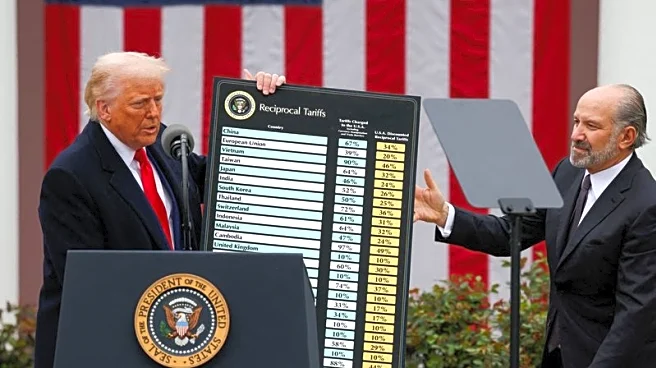
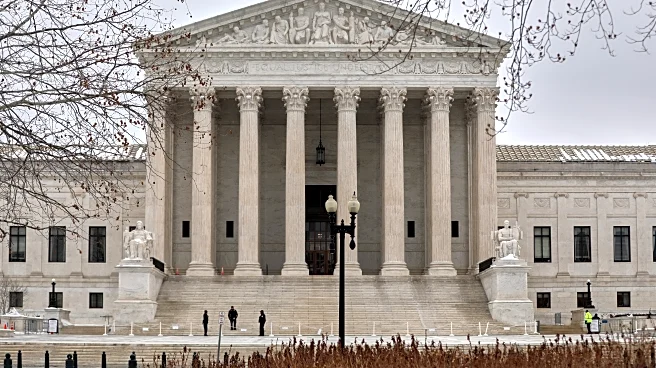
The U.S. Supreme Court has ruled that President Trump does not have the authority to unilaterally impose sweeping tariffs on nearly every country under a federal emergency powers law. This decision strikes down the tariffs that were implemented as part
of President Trump's trade policies, which aimed to protect American industries by imposing additional costs on imported goods. The ruling highlights the limitations of presidential power in altering trade agreements without congressional approval. The decision is a significant legal setback for the Trump administration's approach to international trade, which has been characterized by a series of tariffs and trade disputes.
Why It's Important?
The Supreme Court's decision has significant implications for U.S. trade policy and international relations. By limiting the president's ability to impose tariffs unilaterally, the ruling reinforces the role of Congress in trade matters, potentially leading to more stable and predictable trade policies. This could benefit U.S. businesses and consumers by reducing the uncertainty and costs associated with sudden tariff changes. Additionally, the decision may improve diplomatic relations with affected countries, as it signals a move towards more collaborative and negotiated trade agreements. However, industries that benefited from the tariffs may face increased competition from foreign imports.
What's Next?
Following the Supreme Court's ruling, there may be legislative efforts to clarify or amend the federal emergency powers law to better define the scope of presidential authority in trade matters. Congress could also take a more active role in shaping U.S. trade policy, potentially leading to new trade agreements or modifications to existing ones. Businesses and trade groups are likely to lobby for policies that align with their interests, while international partners may seek to renegotiate terms that were affected by the tariffs. The ruling could also influence future administrations' approaches to trade policy and executive power.