



What's Happening?
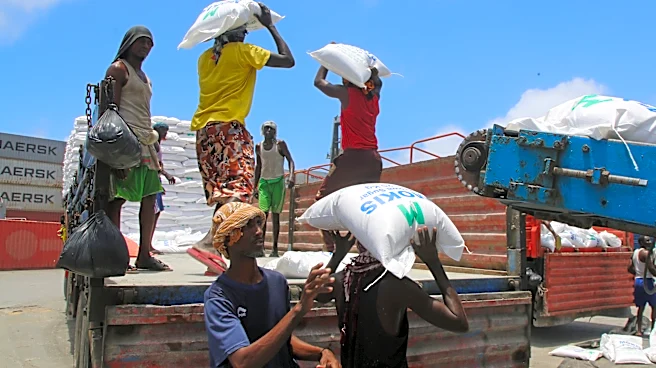
The International Organization for Migration (IOM) has issued a critical warning that emergency relief supplies for Sudan, distributed through its Common Humanitarian Corridor, are projected to run out by the end of September. This comes amidst escalating
conflict, a growing number of displaced individuals, and the impact of heavy rains across the region. Since July 2023, the IOM's corridor has reached 2.84 million people, providing essential aid such as shelter materials and emergency household kits. However, the number of beneficiaries has declined significantly, from over one million in 2024 to 804,000 in 2025, and approximately 330,000 so far in 2026. IOM Director General Amy Pope emphasized the dire situation, stating that the humanitarian system could collapse within weeks without immediate additional funding. The organization requires $15 million to maintain minimum operational capacity, which would support 305,000 people, while $42 million would enable an expansion of assistance to one million people.
Why It's Important?
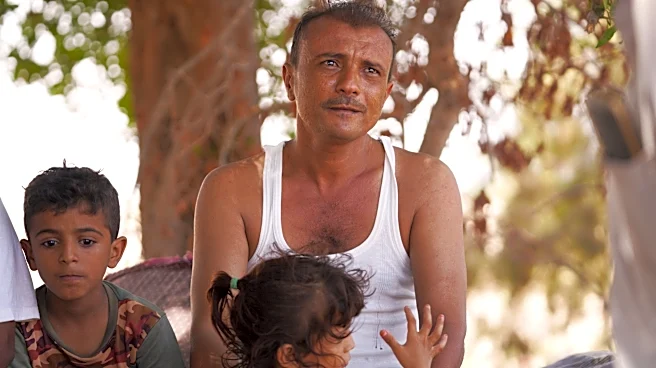
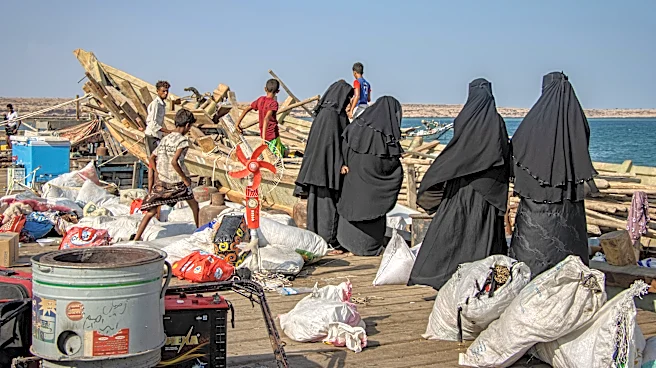
The potential collapse of the IOM's Common Humanitarian Corridor in Sudan carries severe implications for millions of vulnerable people. With 8.6 million individuals internally displaced and 4.9 million registered as returnees, the disruption of aid supplies would exacerbate an already dire humanitarian crisis. Approximately 70% of internally displaced people reside with host families or in informal settlements, making them highly dependent on external assistance for survival. The corridor is crucial for coordinating and delivering emergency supplies through a network of over 100 registered partners. Its disruption would not only weaken the immediate humanitarian response but also make it significantly more difficult and costly to rebuild essential supply chains and coordination mechanisms, leading to increased suffering, displacement, and potential loss of life in a country already ravaged by conflict and natural disasters.
What's Next?
Without immediate and substantial donor funding, the IOM anticipates that its existing stocks of critical aid, including shelter materials, sanitation supplies, and emergency household items, will be depleted by the end of September. This will force a drastic reduction in humanitarian assistance, potentially leading to a complete halt of operations in some areas. The IOM is actively appealing for $15 million to maintain minimal operations, $27 million to restore assistance to 2025 levels, and $42 million to expand its reach to one million people. The coming weeks will be critical as the international community decides whether to provide the necessary financial support to prevent a further deterioration of the humanitarian situation in Sudan. Failure to secure funding will likely result in increased displacement, heightened health risks, and widespread food insecurity for millions.
Beyond the Headlines
The impending crisis in Sudan's humanitarian corridor highlights a broader systemic issue of underfunding for critical aid operations in conflict zones. The IOM's warning underscores the fragility of humanitarian supply chains and the profound impact of donor fatigue or shifting priorities on vulnerable populations. Beyond the immediate need for shelter and food, the disruption of aid can lead to long-term societal consequences, including increased instability, forced migration, and the erosion of social structures. The international community's response to this funding shortfall will serve as a critical test of its commitment to humanitarian principles and its ability to prevent widespread suffering in complex emergencies. The long-term implications could include a precedent for reduced aid in other crises, further straining global humanitarian efforts and potentially leading to more protracted conflicts and displacement.