








What's Happening?
Indonesia is focusing on achieving food self-sufficiency as global protectionist measures increase. Coordinating Minister for Food Affairs, Zulkifli Hasan, highlighted the country's success in becoming self-sufficient in key food commodities, such as rice,
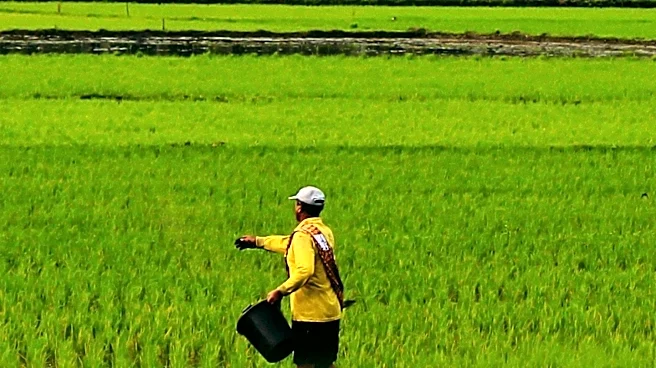
corn, and chicken, during the 8th Indonesian Muslim Congress. This move comes in response to geopolitical dynamics that have led many countries to prioritize domestic supplies over exports. Indonesia ended its reliance on imported rice in 2025, achieving a surplus of 4.2 million metric tons. The government has shifted from import-centered policies to initiatives that empower farmers, such as improving selling prices for unhusked rice and expanding fertilizer access.
Why It's Important?
Indonesia's push for food self-sufficiency is significant as it aims to protect its economy from global supply chain disruptions and rising protectionism. By reducing dependency on imports, Indonesia strengthens its economic resilience and supports local farmers, enhancing national food security. This strategy not only boosts the agricultural sector but also contributes to national dignity and economic stability. The focus on self-reliance in food and energy sectors positions Indonesia to better withstand external economic pressures and geopolitical uncertainties.