
What's Happening?
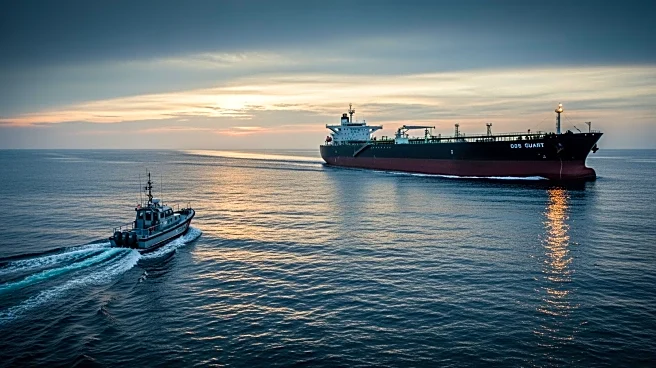
The United States is actively pursuing an oil tanker that fled when the Coast Guard attempted to board it. This incident marks the third time in less than two weeks that the U.S. has targeted oil tankers
linked to Venezuela, as part of efforts to increase pressure on the country's oil exports. The U.S. government has been intensifying its actions against Venezuelan oil shipments, which are seen as a critical source of revenue for the Venezuelan government. The pursuit of the tanker underscores the ongoing tensions between the U.S. and Venezuela, particularly concerning the latter's oil industry.
Why It's Important?
The U.S. pursuit of the oil tanker is significant as it highlights the ongoing geopolitical tensions between the United States and Venezuela. The U.S. has been imposing sanctions on Venezuela in an attempt to curb its oil exports, which are vital to the country's economy. By targeting these shipments, the U.S. aims to weaken the Venezuelan government's financial resources. This action could further strain diplomatic relations and impact global oil markets, potentially affecting oil prices and supply chains. The situation also reflects broader U.S. foreign policy strategies in the region, aiming to influence political and economic conditions in Venezuela.
What's Next?
The pursuit of the oil tanker is likely to lead to further diplomatic and possibly legal actions. The U.S. may continue to increase its enforcement measures against Venezuelan oil exports, potentially leading to more confrontations at sea. This could prompt reactions from Venezuela and its allies, possibly escalating tensions further. Additionally, the international community may respond to these developments, with some countries supporting U.S. actions while others may criticize them. The situation could also influence future U.S. policy decisions regarding sanctions and international maritime law enforcement.