





What's Happening?
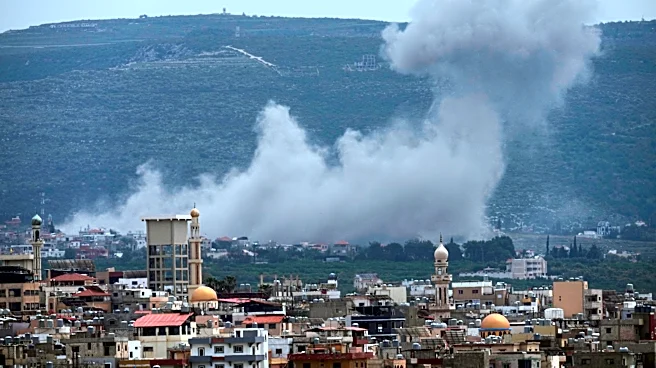
A French UN peacekeeping soldier was killed in southern Lebanon following an attack that left three others wounded. French President Emmanuel Macron attributed the attack to Hezbollah, although the group denied involvement. The incident occurred near
the village of Ghandouriyeh after a ceasefire between Israel and Hezbollah had been in effect for ten days. The soldier, identified as Staff Sgt. Florian Montorio, was part of a mission to open a route to a UNIFIL post isolated due to ongoing conflict. The Lebanese Military Tribunal has launched an investigation into the attack, with Hezbollah urging caution in assigning blame until the investigation is complete.
Why It's Important?
The death of the French soldier highlights the ongoing volatility in southern Lebanon despite a ceasefire. The incident underscores the challenges faced by UN peacekeeping forces in maintaining stability in regions with entrenched militant groups. France's call for Lebanese authorities to arrest those responsible reflects international pressure on Lebanon to ensure the safety of peacekeepers. The attack could strain relations between Lebanon and France, and potentially impact international peacekeeping efforts in the region. The situation also raises concerns about Hezbollah's role and influence in Lebanon, which could affect regional stability.
What's Next?
Lebanese authorities are expected to continue their investigation into the attack, with potential diplomatic repercussions depending on the findings. France may increase pressure on Lebanon to ensure the safety of UNIFIL forces, possibly leading to changes in peacekeeping operations. The ceasefire's durability remains uncertain, with Hezbollah's response to accusations and Israel's military actions potentially influencing future developments. The international community will likely monitor the situation closely, considering the implications for regional peace and security.
Beyond the Headlines
The attack on UNIFIL forces raises questions about the effectiveness of international peacekeeping missions in conflict zones. It highlights the complexities of operating in areas with multiple armed factions and the risks faced by peacekeepers. The incident may prompt discussions on the need for enhanced security measures and coordination between UN forces and local authorities. Additionally, it could lead to broader debates on the role of international actors in mediating conflicts involving non-state actors like Hezbollah.