







What's Happening?
The United States has decided not to renew waivers that allowed the purchase of oil from Iran and Russia, according to Treasury Secretary Scott Bessent. These waivers were initially issued to mitigate the impact of the Russia-Ukraine war and the U.S.-Iran
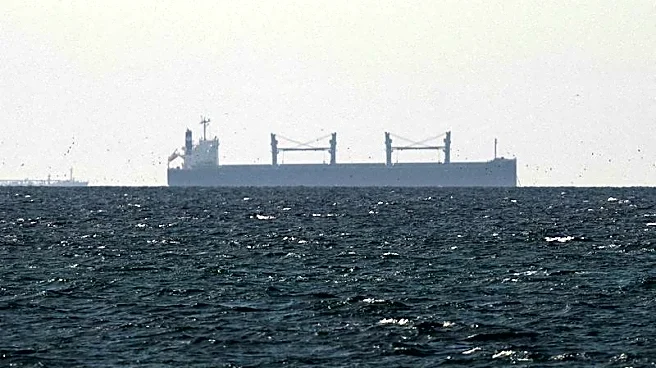
conflict on global energy markets. The decision is part of a broader strategy to intensify pressure on Iran, with new sanctions targeting the Iranian oil shipping network led by Mohammad Hossein Shamkhani. The U.S. Treasury Department has also imposed sanctions on individuals and entities involved in a money-laundering scheme exchanging Venezuelan gold for Iranian oil.
Why It's Important?
The non-renewal of these waivers is significant as it underscores the U.S. government's commitment to maintaining pressure on Iran and Russia through economic sanctions. This move could have substantial implications for global energy markets, potentially leading to increased oil prices and affecting countries dependent on these oil supplies. The sanctions aim to disrupt the financial networks supporting Iran's oil industry, thereby weakening its economic stability. This decision reflects the U.S.'s strategic use of economic tools to influence international relations and curb the activities of nations it deems adversarial.
What's Next?
The immediate consequence of this decision is likely to be a tightening of global oil supplies, which could lead to higher prices. Countries that rely on Iranian and Russian oil may need to seek alternative sources, potentially reshaping global energy alliances. The U.S. may face diplomatic challenges as it navigates the reactions of countries affected by these sanctions. Additionally, the effectiveness of these sanctions in achieving U.S. foreign policy goals will be closely monitored, as will the responses from Iran and Russia, which may seek to circumvent these restrictions.