
What's Happening?
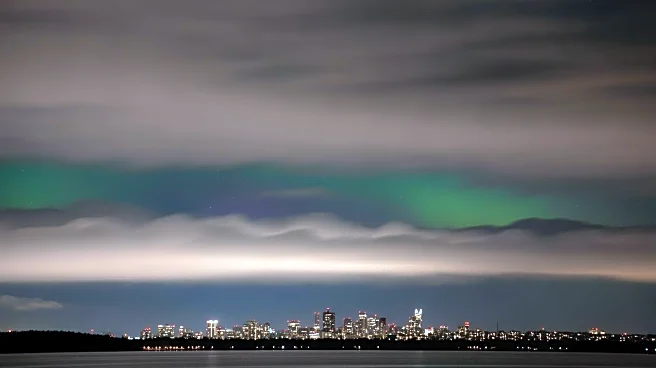
A geomagnetic storm is predicted to make the northern lights visible across nearly 20 U.S. states, including parts of the Midwest and Pacific Northwest, on March 18 and 19. The National Oceanic and Atmospheric Administration's Space Weather Prediction
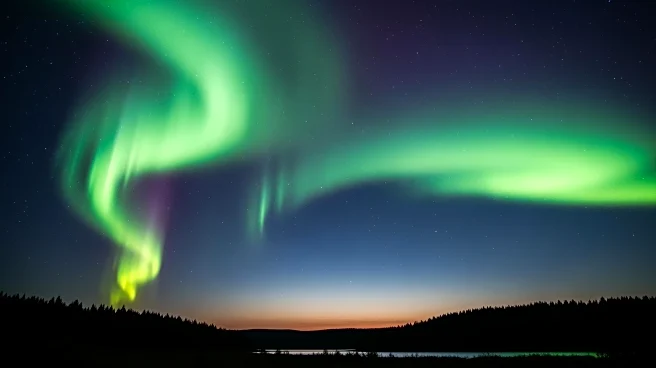
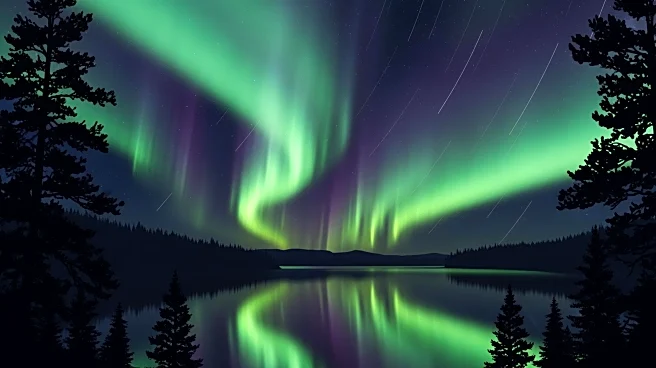
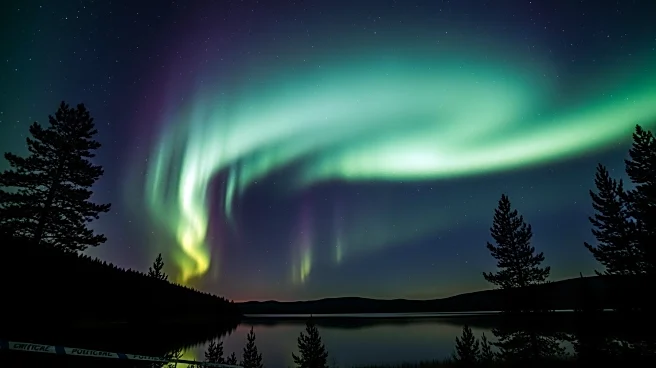
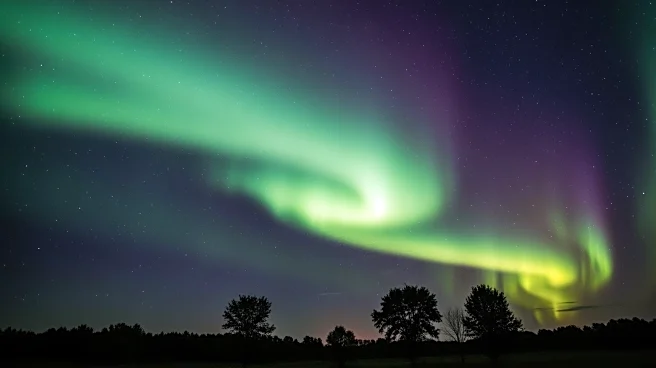
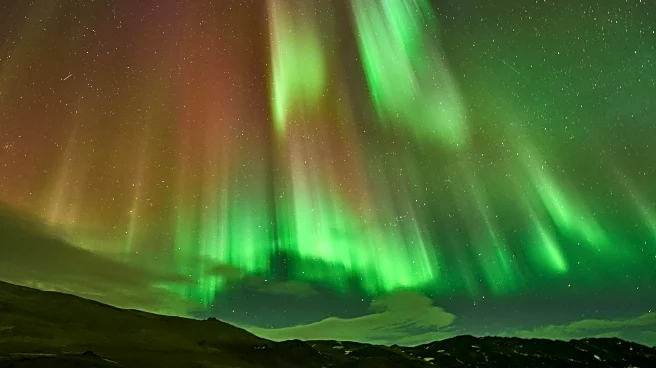
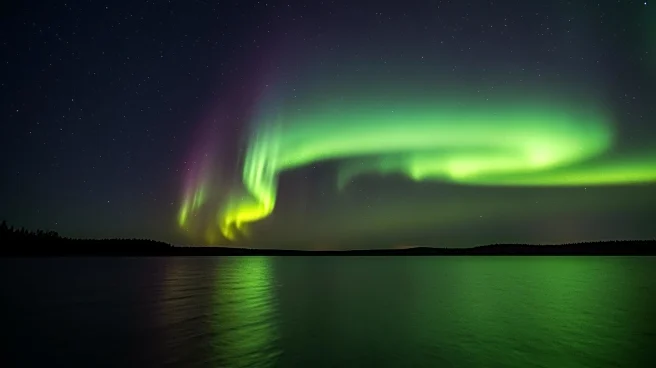
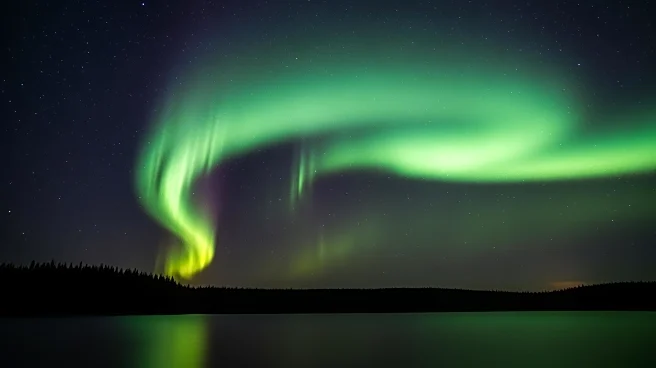
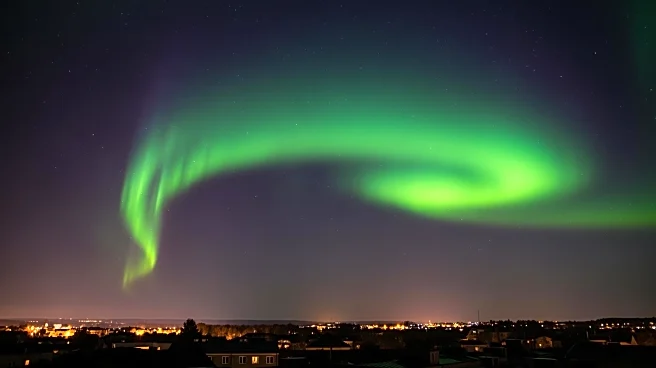
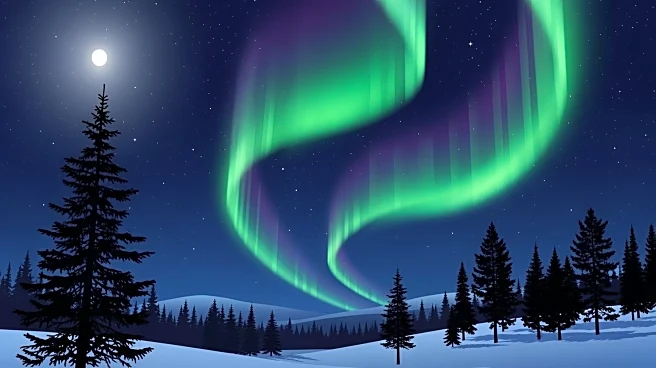
Center forecasts that the aurora could be seen as far south as Illinois and Oregon, depending on the storm's intensity. The phenomenon, known as the aurora borealis, occurs when charged particles from the sun interact with Earth's atmosphere, creating colorful light displays. The best viewing times are typically between 10 p.m. and 2 a.m. local time, and the visibility will depend on local weather conditions and the strength of the geomagnetic storm.
Why It's Important?
The widespread visibility of the northern lights across the U.S. is a rare event that highlights the impact of solar activity on Earth's atmosphere. This occurrence provides a unique opportunity for millions of Americans to witness a natural spectacle that is usually confined to polar regions. It also underscores the importance of understanding space weather and its potential effects on technology and infrastructure, such as satellite operations and power grids. For communities within the view line, this event can boost interest in astronomy and environmental science, encouraging educational and recreational activities.
What's Next?
As the geomagnetic storm progresses, residents in the affected states are advised to monitor local weather forecasts and the NOAA's aurora predictions for the best viewing opportunities. Clear skies and dark, open areas away from city lights will provide the best chances to see the aurora. This event may also lead to increased public interest in space weather phenomena, prompting further educational initiatives and community engagement in science and technology topics.