



What's Happening?
The city of Greensboro has implemented mandatory Stage II lawn watering restrictions due to ongoing drought conditions, but universities within the city are subject to different rules. While general residents are limited to one day of watering per week
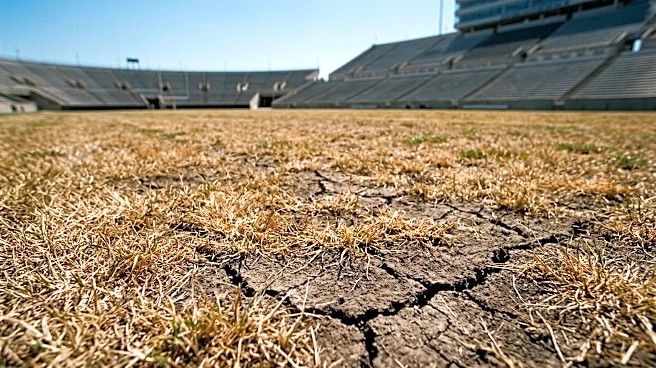
using hand-held hoses, containers, or drip irrigation, public, private, and institutional customers like universities with playing fields have alternative compliance methods. According to Greg Clarke, associate athletics director for facilities and operations at North Carolina A&T State University, these institutions can either manually set watering times to achieve a 40% reduction in usage (meaning 60% usage) or adhere to a specific watering schedule. Additionally, universities are only permitted to water between 10 p.m. and 5 a.m. Clarke noted that while summer months (June through August) pose challenges for Bermuda grass growth under restrictions, the fall season sees a natural slowdown in new growth, easing some of the pressure.
Why It's Important?
The differentiated watering rules for universities in Greensboro highlight the complexities of drought management in urban areas, particularly when balancing public conservation efforts with the operational needs of large institutions. Universities, especially those with extensive athletic facilities, have significant landscaping and field maintenance requirements that differ from residential properties. This policy acknowledges these unique needs while still aiming for overall water conservation. The ability for universities to manage their water usage through percentage reductions or specific overnight schedules provides flexibility, but also places a responsibility on them to adhere to these guidelines. The city's approach reflects an attempt to implement practical solutions that consider various stakeholders, ensuring essential functions can continue while addressing the broader environmental challenge of drought.
What's Next?
Greensboro's Stage II water shortage response plan will remain in effect until further notice. City officials have expressed hope that restrictions may be relaxed in the coming weeks, but this will be contingent on improved weather conditions and increased rainfall. Universities will continue to operate under the modified watering rules, adapting their maintenance schedules to comply with the overnight watering window and reduced usage requirements. The ongoing drought situation underscores the need for long-term water conservation strategies and potentially more resilient landscaping choices for both residential and institutional properties in the region. Future decisions will depend heavily on meteorological developments and the city's assessment of water reservoir levels.
Beyond the Headlines
The varying water restrictions in Greensboro underscore the broader challenge of equitable resource management during environmental crises. While universities receive different guidelines, it raises questions about the balance between institutional needs and community-wide conservation efforts. This situation could spark discussions about the environmental footprint of large organizations and their role in sustainable practices. It also highlights the importance of tailored solutions in drought management, recognizing that a one-size-fits-all approach may not be effective for all sectors. The reliance on 'Mother Nature' for relief emphasizes the vulnerability of urban water systems to climate patterns and the increasing necessity for proactive water management and infrastructure investment.