










What's Happening?
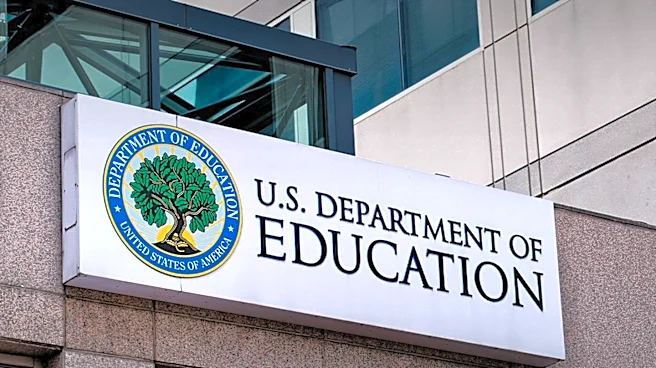
A recent court order has prompted the Department of Education to temporarily expand the list of professional programs eligible for higher loan caps, increasing the number from 11 to 29. This change allows students in these programs to borrow up to $50,000
annually. However, the One Big Beautiful Bill Act (OBBBA) now permits institutions to set their own loan limits, a move intended to prevent overborrowing. Despite this newfound flexibility, many colleges are hesitant to impose lower limits due to concerns about harming students who rely on loans for their education. The National Association of Student Financial Aid Administrators has advised institutions to consult legal counsel before making decisions, while the American Council on Education emphasizes the importance of maintaining access to education.
Why It's Important?
The decision to limit graduate loans has significant implications for students and educational institutions. On one hand, it aims to protect students from excessive debt, aligning with legislative intentions to prevent endless borrowing. On the other hand, it could restrict access to education for students in high-demand fields like healthcare, where the cost of education is substantial. This situation highlights the tension between financial responsibility and educational accessibility. Institutions must balance these factors while considering the potential impact on workforce development, particularly in critical sectors facing labor shortages.
What's Next?
The ongoing legal proceedings could take weeks or months, leaving institutions in a state of uncertainty as they prepare for the upcoming academic year. Colleges must decide whether to implement lower loan limits now or wait for a final court decision. This decision will affect students' ability to finance their education and could influence enrollment numbers in affected programs. Stakeholders, including educational leaders and policymakers, will need to monitor the situation closely and advocate for solutions that support both financial sustainability and educational access.