







What's Happening?
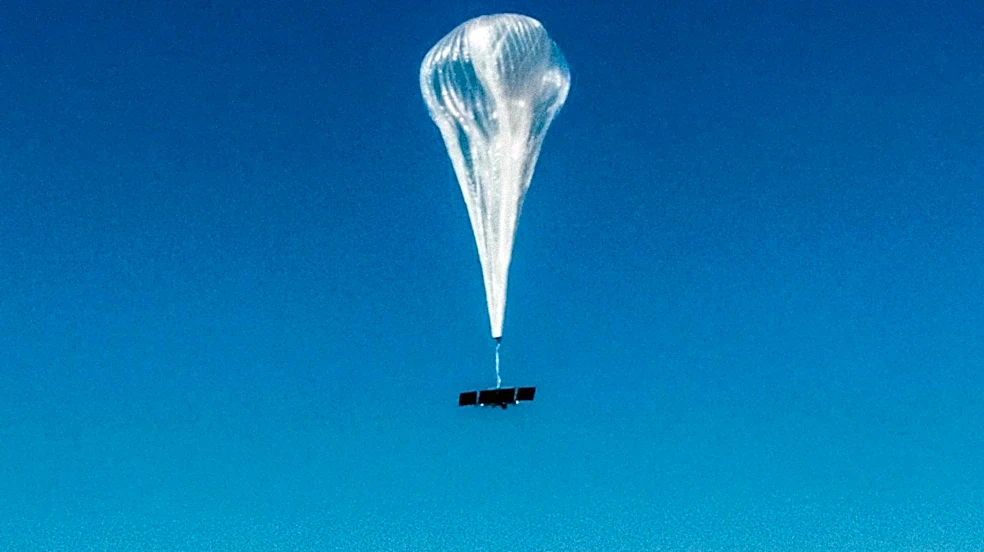
The U.S. Army is actively pursuing the development and deployment of high-altitude balloons to 'exploit the stratosphere' for various military applications. Colonel Joseph Mroszczyk, director of the U.S. Army Space and Missile Defense Command’s Transformation
Integration Directorate – Space Superiority (TID-SS), stated that all options are being considered for this capability, including kinetic uses. The Army defines the stratosphere for its purposes as the region between 60,000 and 100,000 feet (11 to 19 miles) above Earth. These balloons are envisioned to provide 'space-like capabilities' such as intelligence, surveillance, reconnaissance, communications, missile warning, and precision navigation and timing, leveraging persistent coverage and wind patterns. The Army plans multiple balloon experiments over the coming year to determine optimal deployment and payload configurations. Lieutenant General John Rafferty, commander of U.S. Army Space and Missile Defense Command, expressed strong support for the program, noting increasing interest after demonstrations in Europe, the Pacific, and Morocco.
Why It's Important?
This initiative represents a significant shift in the U.S. Army's approach to battlefield awareness and strategic advantage, moving into a 'space littorals' domain. By utilizing the stratosphere, the Army aims to bridge the gap between aerial and space-based assets, offering a resilient and redundant capability that can complement traditional satellite systems, especially in contested environments. The potential for these balloons to carry diverse payloads, including those for sensing, communication, and even kinetic effects, could revolutionize intelligence gathering, targeting, and communication networks for ground forces. This development is particularly crucial given the increasing vulnerability of traditional space assets. The ability to deploy 'cheap, very expendable, rapidly employable' balloon swarms could create multiple dilemmas for adversaries, enhancing the Army's operational flexibility and deterrence capabilities. Furthermore, the collaboration with industry to develop optimal lifting gases and launch methodologies underscores a commitment to rapid innovation and integration of cutting-edge technology into military operations.
What's Next?
Over the next year, the U.S. Army will conduct numerous balloon experiments to refine the technology and determine the best ways to utilize the stratosphere. These experiments will focus on various payloads and operational concepts, including the potential for kinetic applications, though the primary focus currently remains on sensing and communication. The Army is working closely with industry partners to develop the most effective capabilities, including optimal lifting gases and launch methods. The Space Development Agency's (SDA) Transport Layer satellite constellation, once fully integrated, is expected to provide a complementary data distribution layer that could enhance the survivability of these stratospheric platforms in electromagnetically contested environments. This integration with the SDA's mesh network and the Army's Tactical Intelligence Targeting Access Node (TITAN) ground system will be critical for fusing space and tactical data, providing soldiers with comprehensive battlespace awareness. Continued demonstrations in various theaters are anticipated to build further support and accelerate the program's development.
Beyond the Headlines
The U.S. Army's exploration of stratospheric balloons carries profound implications for the future of warfare and international security. The concept of 'killer balloons' introduces a new dimension to military capabilities, potentially blurring the lines between conventional and unconventional weaponry. This development raises ethical and legal questions regarding the use of such platforms, particularly if they are equipped with kinetic capabilities, and how they might be regulated under international law. The dual-use nature of high-altitude balloons, as demonstrated by the 2023 Chinese balloon incident, highlights the challenges of distinguishing between surveillance and offensive capabilities. Furthermore, the emphasis on 'cheap, very expendable' systems suggests a move towards distributed, resilient, and potentially overwhelming military assets, which could alter strategic balances. This initiative also underscores the ongoing militarization of the near-space environment and the increasing competition among global powers to dominate this critical domain, potentially leading to new arms races and doctrines of engagement.