






What's Happening?
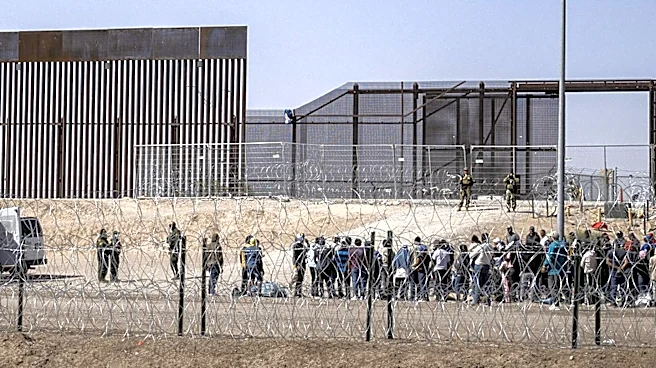
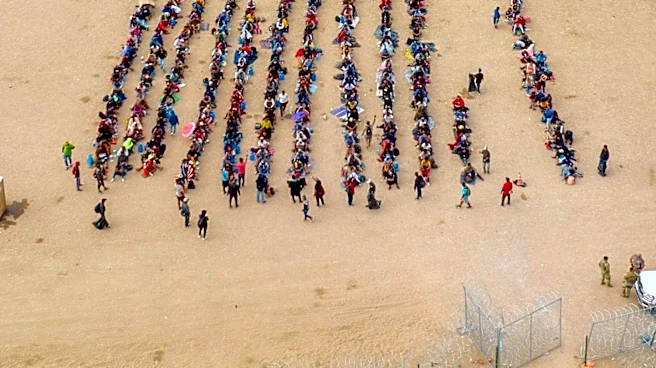
Immigration and Customs Enforcement (ICE) arrested 10,000 individuals over a five-day period at the end of June, marking a significant push in the Trump administration's deportation agenda. This surge in arrests, which translates to approximately 2,000
arrests per day, reflects a shift from high-profile arrest sweeps in major cities to more discreet operations. The Department of Homeland Security emphasized its commitment to arresting and deporting individuals who entered the U.S. illegally, including those with criminal backgrounds. The number of detainees in ICE facilities also increased to around 39,000 in June, up from an average of 30,000 in previous months.
Why It's Important?
The increase in ICE arrests highlights the Trump administration's intensified focus on immigration enforcement, which has significant implications for immigrant communities across the U.S. The surge in detentions could lead to heightened fear and uncertainty among undocumented immigrants and their families. Additionally, the operational shift to less visible enforcement tactics may affect public perception and media coverage of immigration policies. The administration's approach could also influence future immigration policy discussions and legislative actions, impacting stakeholders ranging from immigrant advocacy groups to local law enforcement agencies.
What's Next?
As the Trump administration continues to prioritize immigration enforcement, further increases in ICE operations and detentions are possible. This could prompt responses from immigrant rights organizations, legal challenges, and potential policy adjustments at the federal and state levels. The administration's actions may also influence the political landscape, particularly in states with large immigrant populations, as debates over immigration policy continue to be a contentious issue in U.S. politics.