
What's Happening?
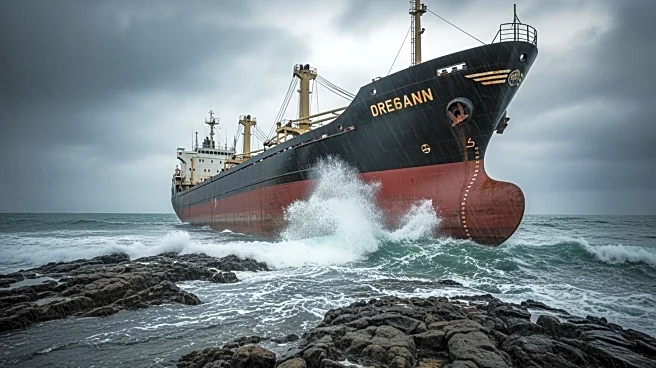
The MSC Baltic III, a vessel grounded in Cedar Cove, Newfoundland and Labrador, Canada, has sustained additional damage due to severe weather conditions. The Canadian Coast Guard reports that the ship's
hull has experienced significant new damage, including increased plate buckling on both the starboard and port sides. Additionally, the stern of the vessel is now noticeably lower in the water. The storm also damaged small salvage equipment onboard. The vessel initially lost power and ran aground in February, approximately 12 nautical miles outside the entrance to Bay of Islands. All 20 crew members were safely airlifted at that time. Currently, teams are conducting on-water and shoreline surveys in Cedar Cove and surrounding beaches as weather conditions allow. Following the storm, there has been an increase in oiled debris, and cleanup efforts are ongoing.
Why It's Important?
The grounding and subsequent damage to the MSC Baltic III highlight the ongoing challenges faced by maritime operations in severe weather conditions. The incident underscores the vulnerability of vessels to environmental factors and the potential for significant environmental impact, as evidenced by the increase in oiled debris. This situation is critical for the shipping industry, which must navigate the dual challenges of ensuring vessel safety and minimizing environmental harm. The Canadian Coast Guard's involvement and the ongoing cleanup efforts reflect the importance of coordinated response strategies in mitigating the impact of such incidents. The event also raises questions about the preparedness of maritime operations in the face of increasingly unpredictable weather patterns, potentially prompting a reevaluation of safety protocols and emergency response measures.
What's Next?
As cleanup efforts continue, the focus will likely remain on mitigating environmental damage and assessing the full extent of the vessel's structural damage. The Canadian Coast Guard and other stakeholders may need to consider long-term strategies for preventing similar incidents, possibly involving enhanced weather monitoring and improved vessel design standards. Additionally, the incident may prompt discussions within the maritime industry about the need for more robust emergency response plans and the potential for international cooperation in addressing maritime safety and environmental protection.