






What's Happening?
NASA's Experimental Fabrication Branch at the Armstrong Flight Research Center in Edwards, California, is playing a crucial role in transforming engineering concepts into mission-ready hardware for research aircraft and technology development. This branch
serves as a comprehensive manufacturing, modification, and repair center for NASA Armstrong's fleet of research and science aircraft. The team specializes in various technical skills, including precision machining, sheet-metal forming, aircraft tubing, welding, additive manufacturing, and composite fabrication. Their expertise allows them to create custom hardware for both aerospace and ground-based applications, ensuring that all components meet NASA's rigorous safety and performance standards. The branch also supports NASA's STEM engagement efforts by participating in local robotics competitions and demonstrating advanced manufacturing techniques to students.
Why It's Important?
The work of NASA's Experimental Fabrication Branch is significant as it directly contributes to advancements in aviation safety, efficiency, and sustainability. By developing mission-critical components and structures, the branch supports NASA's broader goals of improving public aviation. The integration of engineering and fabrication from the early stages of design helps reduce development timelines and minimizes design-to-hardware mismatches, which is crucial for maintaining high safety standards. Additionally, the branch's involvement in STEM education initiatives helps inspire the next generation of engineers and technicians, potentially leading to future innovations in aerospace technology.
What's Next?
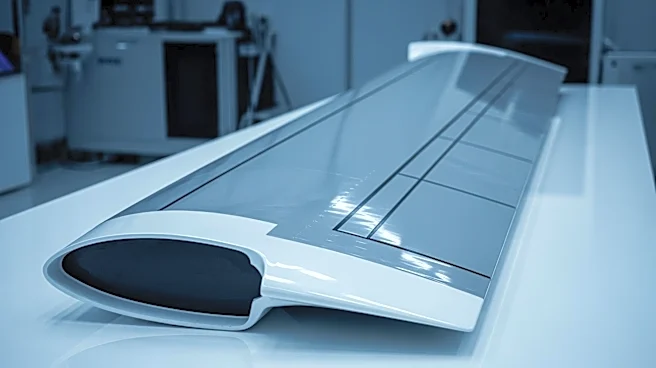
The Experimental Fabrication Branch will continue to support NASA's research efforts by developing new technologies and components for experimental aircraft. As NASA pursues more ambitious projects, such as autonomous flight research and advanced wing-model fabrication, the branch's role will likely expand to accommodate these new challenges. The ongoing collaboration between the fabrication team and engineering teams will be essential in ensuring the success of future missions. Furthermore, the branch's involvement in educational outreach will continue to play a vital role in fostering interest in technical careers among students.
Beyond the Headlines
The work of the Experimental Fabrication Branch highlights the importance of advanced manufacturing in aerospace research. By integrating modern computer-aided design and manufacturing tools, the branch not only enhances the efficiency of NASA's projects but also sets a standard for innovation in the industry. The branch's efforts in STEM engagement also underscore the cultural and educational impact of NASA's work, as it helps bridge the gap between theoretical knowledge and practical application for students.