
What's Happening?
Union Minister for Agriculture & Farmers’ Welfare, Mr. Shivraj Singh Chouhan, announced significant developments in India's agricultural sector through the Agriculture Infrastructure Fund (AIF). The initiative,
led by Prime Minister Narendra Modi, aims to transform farmers from mere food providers to energy providers, contributing to a self-reliant India. The AIF has facilitated the creation of infrastructure worth over ₹1 lakh crore, including cold storages, warehouses, and processing centers, reducing crop losses by up to 15%. The government has also implemented policies like the Minimum Support Price (MSP) and the Self-Reliance in Pulses Mission to support farmers. These efforts are part of a broader strategy to enhance agricultural productivity and ensure fair prices for farmers.
Why It's Important?
The Agriculture Infrastructure Fund is crucial for modernizing India's agricultural sector, which has historically faced challenges such as inadequate storage facilities and low productivity. By investing in infrastructure, the government aims to reduce post-harvest losses, improve market access, and increase farmers' incomes. This initiative supports the broader goal of achieving food security and self-reliance in essential crops like pulses. Additionally, the focus on sustainable practices and crop diversification aligns with global trends towards more resilient and environmentally friendly agriculture. The AIF's impact extends beyond agriculture, contributing to rural development and job creation, thereby supporting India's economic growth.
What's Next?
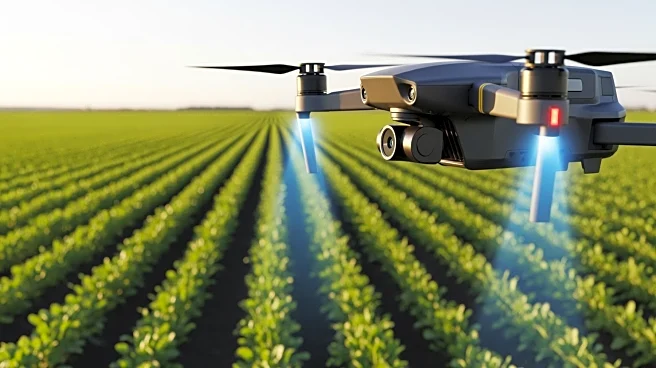
The Indian government plans to continue expanding the Agriculture Infrastructure Fund and related initiatives to further enhance the agricultural sector. Future efforts will likely focus on increasing the adoption of advanced technologies, improving supply chain efficiency, and promoting sustainable farming practices. The government is also expected to strengthen its support for farmers through policies that ensure fair pricing and reduce dependency on imports. As these initiatives progress, they will play a critical role in achieving the vision of a self-reliant India, with agriculture as a key driver of economic and social development.