







What's Happening?
Portola Redwoods State Park, encompassing 2,800 acres, provides a tranquil escape into a deeply shaded redwood forest, offering a contrast to the urban environment of nearby Silicon Valley and the South Bay Area. The park features a visitor center designed
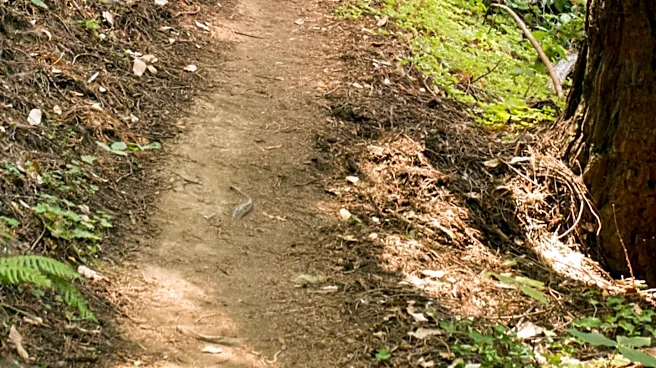
to resemble a wilderness lodge, complete with couches and a fireplace. Visitors can explore eighteen miles of trails that wind alongside meandering creeks, where towering coast redwoods, ferns, and huckleberries thrive. Waterfalls on Fall and Pescadero creeks add to the scenic beauty, cascading over mossy banks and woody debris. The park offers a 55-site family campground, four group campsites, and a trail camp for backpackers. It is also home to the remote and picturesque Peter’s Creek Grove. The park emphasizes environmental protection, particularly regarding the marbled murrelet, an endangered seabird that nests in old-growth forests. Visitors are advised to keep food secured to prevent attracting jays, ravens, and crows, which prey on the murrelet's eggs and chicks. There is a $10 vehicle day-use fee, and camping reservations can be made through www.reservecalifornia.com. Cell reception is unavailable within the park and surrounding areas, making ridesharing services impractical.
Why It's Important?
The preservation and accessibility of Portola Redwoods State Park are crucial for both environmental conservation and public well-being in the U.S. The park safeguards significant old-growth redwood forests, which are vital ecosystems supporting endangered species like the marbled murrelet. These forests play a critical role in carbon sequestration and biodiversity. For the public, especially those residing in the densely populated Silicon Valley and South Bay Area, the park offers an invaluable natural sanctuary for recreation, mental rejuvenation, and connection with nature. The availability of diverse camping options, from family campgrounds to backpacker trail camps, promotes outdoor activity and environmental education across different demographics. The park's emphasis on responsible visitor behavior, such as securing food, highlights the delicate balance between human enjoyment and ecological protection, setting a precedent for sustainable tourism in natural reserves. The lack of cell service, while potentially inconvenient, reinforces the park's role as a true escape from modern digital life, encouraging a deeper immersion in the natural environment.
What's Next?
Portola Redwoods State Park will continue to offer its existing amenities, including its family campground, group campsites, and trail camp for backpackers. The park will maintain its extensive network of hiking trails, providing opportunities for visitors to experience the redwood forest and its natural features, such as the waterfalls on Fall and Pescadero creeks. Ongoing efforts will focus on the protection of the park's old-growth redwoods and the endangered marbled murrelet, with continued enforcement of policies regarding food storage to prevent harm to wildlife. The park will likely continue to encourage visitors to plan ahead due to the lack of cell reception and the distance to gas stations and grocery stores. Public programs and guided hikes, as listed on the Parks Events calendar, are expected to continue, offering educational opportunities for visitors. Future management may involve monitoring visitor impact on the delicate ecosystem and adapting conservation strategies as needed to ensure the long-term health of the park.
Beyond the Headlines
The existence of Portola Redwoods State Park underscores a broader societal value placed on preserving natural landscapes amidst rapid urbanization and technological advancement. Its proximity to Silicon Valley, a global hub of innovation, creates a compelling juxtaposition: a place where ancient ecosystems persist alongside cutting-edge technology. This highlights the increasing need for accessible natural spaces as an antidote to the stresses of modern life, offering mental and physical health benefits. The park's strict rules regarding food and wildlife, particularly concerning the endangered marbled murrelet, reflect a growing awareness of human impact on fragile ecosystems and the ethical responsibility to protect biodiversity. The absence of cell service, while a practical consideration, also serves as a subtle commentary on the importance of disconnecting from digital distractions to fully engage with the natural world. This deliberate 'unplugging' can foster a deeper appreciation for the environment and encourage a more mindful approach to leisure and recreation.