




What's Happening?
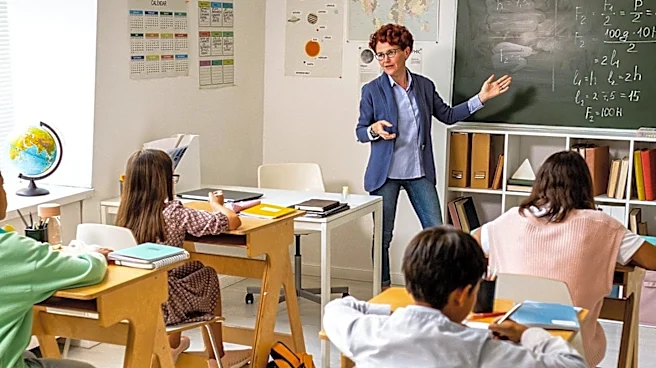
Artificial intelligence (AI) and virtual reality (VR) are rapidly transforming American classrooms, leading to a growing debate among educators and parents about how to effectively integrate these powerful technologies while ensuring students develop
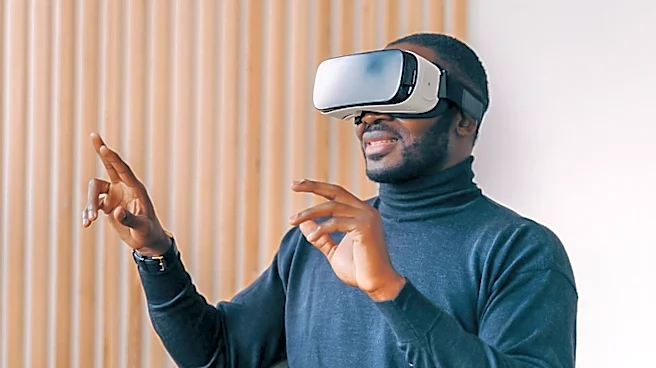
critical thinking skills. Optima CEO Adam Mangana, co-founder of what is described as the world's first virtual reality school, argues against banning these technologies. Instead, he advocates for teaching students responsible use with appropriate supervision. Mangana emphasizes that the danger lies not in the technology itself, but in 'passive consumption,' where students rely on AI to complete assignments without genuine engagement. He suggests that AI should function as an interactive 'sparring partner' or 'Socratic guide' that challenges students to formulate their own answers, rather than a replacement for human thought. Optima's approach includes using VR headsets for immersive learning experiences, such as virtual tours of historical sites, while still retaining live teacher instruction.
Why It's Important?
The integration of AI and VR into U.S. classrooms carries significant implications for the future of education and workforce development. On one hand, these technologies offer unprecedented opportunities for personalized learning, making education more accessible and engaging for diverse student populations. This could lead to a more skilled workforce better prepared for a technology-driven economy. On the other hand, concerns about 'passive consumption' and the potential for AI to diminish critical thinking skills highlight a crucial challenge. Without proper guardrails, students might become overly reliant on AI, hindering their ability to problem-solve independently. This could create a generation less capable of original thought, impacting innovation and societal progress. The debate also touches on equity, as access to advanced technology in schools could exacerbate existing disparities if not implemented thoughtfully, affecting who gains the most from these educational advancements.
What's Next?
As AI and VR continue to permeate educational settings, the immediate next steps will likely involve the development and implementation of new pedagogical strategies and ethical guidelines. Educators will need to focus on teaching students how to critically evaluate AI-generated content and use these tools as aids rather than substitutes for learning. Schools and technology providers, like Optima, will likely collaborate to refine educational software and platforms to promote active engagement and critical thinking. Furthermore, policymakers may consider establishing national standards or recommendations for AI and VR use in schools, addressing issues such as data privacy, screen time, and equitable access. Parent and community engagement will also be crucial in shaping these policies, ensuring that the benefits of technology are maximized while potential risks are mitigated. The ongoing evolution of AI capabilities will necessitate continuous adaptation and re-evaluation of these guardrails.
Beyond the Headlines
The adoption of AI and VR in education delves into deeper philosophical questions about the nature of learning and human intelligence. Historically, new technologies, from the written word to calculators, have sparked debates about their impact on cognitive abilities. AI and VR present a similar, yet more profound, challenge by potentially automating complex cognitive tasks. This raises questions about what skills will be most valuable in a future where AI can perform many intellectual functions. The ethical dimension also includes concerns about algorithmic bias in AI tools and the potential for VR to create echo chambers or distort perceptions of reality. Culturally, the shift towards immersive digital learning environments could reshape how students interact with information, each other, and the world, potentially altering social dynamics and the very definition of a 'classroom.' The long-term societal impact will depend on how effectively educators and policymakers navigate these complex ethical and pedagogical landscapes.