






What's Happening?
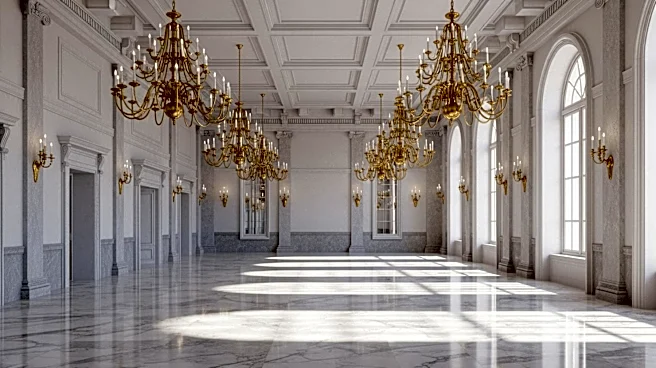
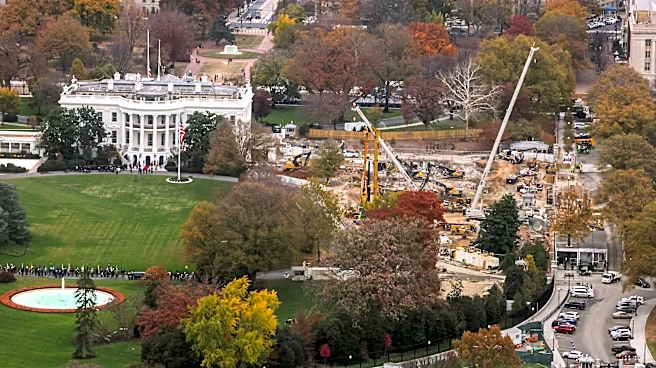
The Department of Justice has argued that no court has the authority to halt the construction of a $400 million ballroom and secure underground facility at the White House, a project ordered by President Trump. The administration has cited national security
concerns as justification for the construction, following a failed assassination attempt. The project has faced legal challenges from the National Trust for Historic Preservation, which sued after the East Wing's demolition began without proper review. The case is currently before the Washington DC circuit court of appeals, testing the limits of presidential authority.
Why It's Important?
This legal battle highlights the tension between presidential authority and judicial oversight. The outcome could set a precedent for how much power a president has in altering federal property without congressional approval. The administration's stance that only Congress can stop the project raises questions about the balance of power between the executive branch and the judiciary. The case also underscores the ongoing debate over the use of national security as a rationale for significant federal projects, potentially impacting future administrations' ability to undertake similar initiatives.
What's Next?
The appellate court's decision will be pivotal in determining the project's future and could influence how presidential authority is interpreted in similar cases. If the court sides with the administration, it may embolden future presidents to undertake large-scale projects with minimal oversight. Conversely, a decision against the administration could reinforce judicial checks on executive power. The case may also prompt legislative action from Congress to clarify the scope of presidential authority over federal property.