
What's Happening?
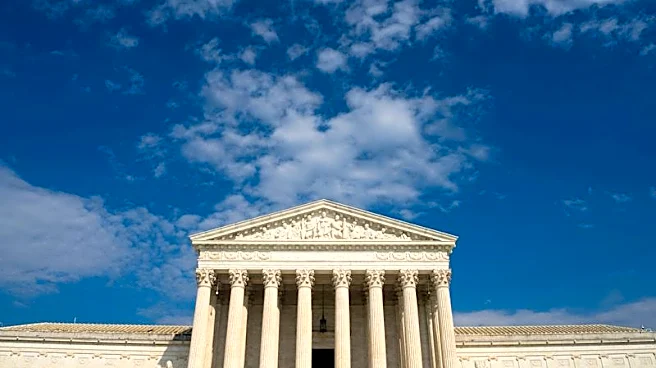
Missouri's congressional redistricting process is once again before the U.S. Supreme Court, marking the third time the issue has reached the highest court. The U.S. Court of Appeals for the 8th Circuit
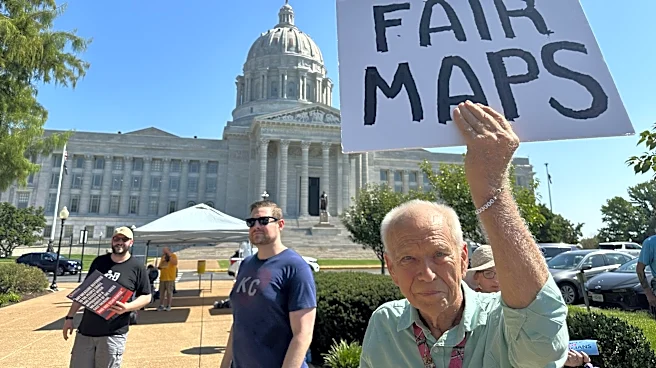
recently ruled 2-1 that the state must use its new 2025 congressional map for the November election, overturning an earlier Supreme Court order that had kept the 2022 map in place. This decision has plunged Missouri's election administration into further uncertainty, as local election officials have faced conflicting guidance and litigation throughout the process. The dispute originated from a special legislative session in September 2025, called by Governor Mike Kehoe, to redraw congressional maps. The new map, which would likely shift the partisan makeup from six Republicans and two Democrats to seven Republicans and one Democrat, faced immediate opposition and a referendum petition. The Missouri Supreme Court initially ruled that the referendum petition could pause the new map, but a federal district court later ordered the use of the 2025 map, citing federal law. The Supreme Court then blocked that order, only for the 8th Circuit to reinstate the 2025 map. This continuous back-and-forth has created a challenging environment for election administrators, who have had to prepare for elections under multiple, shifting district boundaries.
Why It's Important?
The ongoing legal battle over Missouri's congressional maps highlights the profound impact of redistricting on political representation and the stability of election administration. The dispute underscores the tension between state-level legislative actions, citizen-led referendums, and federal court interventions, creating a complex legal landscape. The potential shift in congressional districts from a 6-2 Republican advantage to a 7-1 advantage could significantly alter Missouri's representation in the U.S. House of Representatives, influencing national legislative outcomes. Furthermore, the chaotic nature of the process, with conflicting court orders and last-minute changes, erodes public trust in the electoral system and places an immense burden on local election officials. The situation also raises questions about the role of the judiciary in electoral processes and the interpretation of constitutional provisions related to elections. The outcome of this case could set precedents for how redistricting disputes are handled in other states, particularly concerning mid-decade redistricting and the interplay between state and federal legal authorities.
What's Next?
The Missouri redistricting case is now back with the U.S. Supreme Court, which has been asked to review the 8th Circuit's decision. Justice Kavanaugh has requested briefing on the matter, indicating that the Supreme Court will likely issue a new ruling or clarification soon. The immediate consequence will be the determination of which congressional map—the 2022 or 2025 version—will be used for the upcoming November election. This decision is critical, as absentee ballots have already begun to be distributed, and military and overseas voters have received ballots based on the 2022 map. Regardless of the Supreme Court's final decision, the legal and political ramifications are expected to continue. Further litigation from candidates who campaigned under one map but may now be running in different districts is possible. The situation also prompts a reevaluation of the processes and timelines for redistricting to prevent similar administrative challenges in future election cycles.
Beyond the Headlines
This redistricting saga in Missouri reveals deeper issues concerning the politicization of electoral processes and the challenges of maintaining a stable and fair democratic system. The constant legal challenges and the involvement of multiple judicial levels—state supreme court, federal district court, circuit court of appeals, and the U.S. Supreme Court—underscore the lack of clear, universally accepted guidelines for redistricting. The situation also highlights the vulnerability of election administration to political maneuvering, as local officials are caught between conflicting directives. The debate over whether primaries are constitutionalized and the implications of changing maps between primary and general elections touch upon fundamental aspects of electoral integrity. This case could contribute to a broader discussion about the need for independent redistricting commissions, similar to those advocated in California, to depoliticize the process and ensure that district lines serve voters rather than political parties. The long-term impact could include legislative efforts to reform redistricting laws at both state and federal levels to prevent such protracted and disruptive legal battles.