



What's Happening?
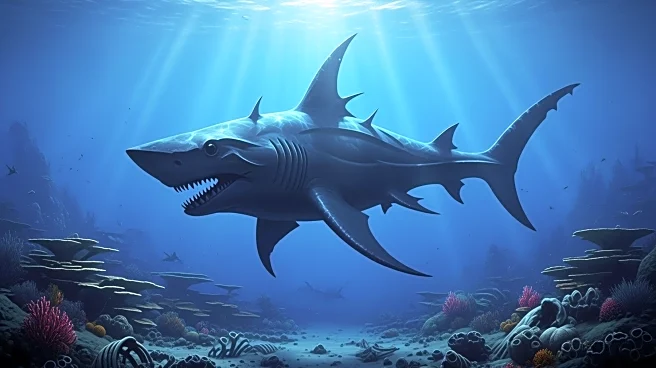
Researchers have identified a massive prehistoric shark species that roamed the waters off northern Australia during the Cretaceous period, predating the infamous megalodon by 15 million years. The discovery was made through the study of large vertebrae
found near Darwin, which were initially unearthed in the late 1980s and 1990s. These vertebrae, measuring 4.7 inches across, belonged to a shark species known as cardabiodontids, which are now considered the earliest known mega-predators of the modern shark lineage. The study, published in Communications Biology, highlights that these sharks were about 26 feet long, making them larger than the ancestors of today's great white sharks. The research team used various methods, including CT scans and mathematical models, to estimate the size and shape of these ancient predators.
Why It's Important?
This discovery is significant as it pushes back the timeline of when large predatory sharks first appeared, providing new insights into the evolution of modern sharks. Understanding the size and behavior of these ancient sharks can help scientists learn more about the ecological dynamics of prehistoric marine environments. Additionally, studying these ancient ecosystems may offer clues about how current marine species might adapt to environmental changes. The research underscores the importance of paleontological studies in uncovering the history of life on Earth and the evolutionary success of certain species over millions of years.