





What's Happening?
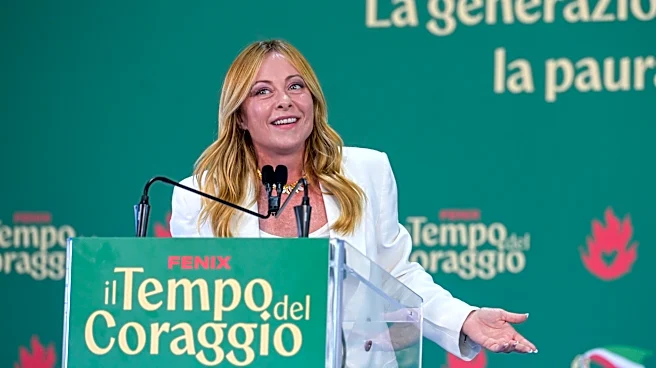
Italian Prime Minister Giorgia Meloni has announced plans to introduce measures aimed at capping the number of foreign students in classrooms and banning burqas and niqabs in schools. Speaking to the youth wing of her Brothers of Italy party, Meloni emphasized
the importance of language and cultural integration for individuals seeking to build their future in Italy. The proposed measures would also mandate compulsory Italian language lessons for parents of foreign students who are experiencing significant difficulties integrating into the school system. Meloni specifically mentioned the burqa and niqab, modest dresses worn by some Muslim women, but did not include the hijab in her proposed ban. These measures, once approved by the government, would require parliamentary approval within 60 days to become law. Meloni, who has a background in the far-right, has maintained a hawkish stance on migration throughout her political career.
Why It's Important?
These proposed policies by Prime Minister Meloni reflect a broader trend in some European nations towards stricter immigration and integration policies, which could influence similar debates in the U.S. and other Western countries. The emphasis on cultural and linguistic assimilation, coupled with restrictions on religious attire in schools, touches upon fundamental questions of religious freedom, cultural identity, and national sovereignty. For the U.S., such developments in allied nations can inform discussions on immigration reform, educational policies, and the balance between individual liberties and national cohesion. The potential ban on burqas and niqabs, while specific to Italy, could resonate with ongoing discussions in the U.S. regarding religious symbols in public spaces and the integration of diverse communities. Furthermore, Meloni's political evolution from a nationalist outlier to an establishment figure, while still pursuing such policies, highlights the complex and shifting political landscape in Western democracies.
What's Next?
The proposed measures will first need to be approved by the Italian government before being presented to parliament. Once introduced, they will require parliamentary approval within 60 days to be enacted into law. This process will likely involve significant public debate and potential opposition from various civil society groups and political parties. The implementation of compulsory Italian language lessons for parents of foreign students will necessitate the development of new educational programs and resources. Additionally, the ban on burqas and niqabs in schools could face legal challenges based on religious freedom arguments. The outcome of these legislative processes in Italy could set a precedent or influence policy discussions in other European countries grappling with similar issues of immigration, integration, and cultural identity. Meloni's administration is also keen to boost its popularity ahead of a general election next year, suggesting that these policies are part of a broader political strategy.
Beyond the Headlines
The proposed policies delve into the deeper societal implications of cultural integration and national identity in an increasingly globalized world. The debate surrounding the burqa and niqab ban extends beyond religious attire to encompass broader questions of secularism, women's rights, and the role of visible religious symbols in public institutions. The emphasis on language and cultural understanding as prerequisites for integration raises questions about the nature of multiculturalism and the expectations placed on immigrant communities. These measures could inadvertently lead to further marginalization or alienation of certain groups if not implemented with careful consideration for human rights and social cohesion. The discussion also highlights the tension between national sovereignty and international human rights norms, particularly concerning religious freedom. The long-term impact on social harmony and the perception of Italy as an inclusive society will be crucial to observe.