




What's Happening?
Georgia Power, the state's largest utility, is facing scrutiny from renewable energy advocates over its use of an obscure calculation called Effective Load Carrying Capability (ELCC) in its latest plan to expand the electric grid. The utility is preparing
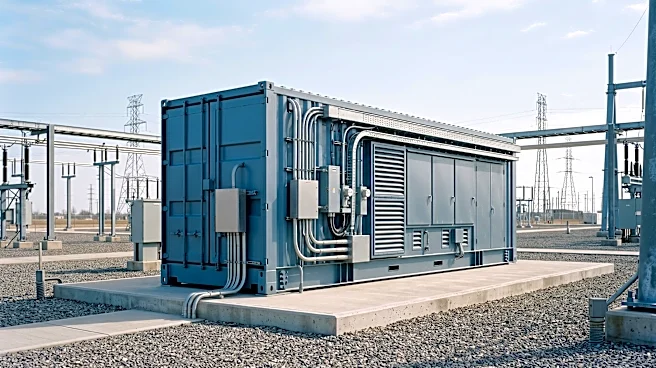
to add between 2,000 and 6,000 megawatts of new capacity by 2032 and 2033, considering both natural gas and battery storage. However, Georgia Power is currently assigning battery storage an ELCC of just 20%, meaning a 1,000-megawatt battery project would only count for 200 megawatts towards its capacity needs. In contrast, a 1,000-megawatt natural gas plant is assigned an 80% ELCC, counting for 800 megawatts. This significantly lower ELCC for batteries, compared to previous calculations of around 75%, is seen by advocates like Bob Sherrier of the Southern Environmental Law Center as putting a "thumb on the scale for gas," making battery storage appear artificially more expensive and less valuable in the procurement process.
Why It's Important?
This situation in Georgia has significant implications for the U.S. energy transition and the broader adoption of renewable energy. If Georgia Power's ELCC calculation for batteries remains unchanged, it could lead to a disproportionate investment in natural gas plants, locking in millions more tons of annual carbon emissions. This directly contradicts national and global efforts to decarbonize the electricity sector and transition to cleaner energy sources. For the U.S. renewable energy industry, such utility practices create an uneven playing field, hindering the growth of battery storage and potentially slowing down innovation and investment in these critical technologies. It also raises questions about regulatory oversight and the transparency of utility planning processes, which can impact consumer costs, environmental quality, and the overall pace of the clean energy transition across the nation. The outcome in Georgia could set a precedent for how other states and utilities evaluate and integrate renewable energy resources.
What's Next?
Georgia Power is currently reviewing proposals for its 2032-2033 expansion, with the 20% ELCC for battery storage still in effect. However, the issue is not settled, as the utility and regulators are expected to discuss which projects to move forward with early next year. Renewable energy advocates, including the Southern Environmental Law Center and the Advanced Power Alliance, plan to push for a higher ELCC in this procurement and in the next round of expansion planning, expected to begin in 2028, if the issue is not resolved. The impact of the current ELCC calculation will become clearer when the utility's selected projects are submitted for regulatory approval in mid-2027. The ongoing debate highlights the need for transparent and equitable evaluation methods for all energy resources to ensure a fair competition between fossil fuels and renewables.
Beyond the Headlines
The controversy surrounding Georgia Power's ELCC calculation reveals a deeper systemic challenge in the energy transition: how established regulatory frameworks and utility practices, designed for a fossil-fuel-dominated grid, adapt to the unique characteristics of renewable energy. The ELCC, while a technical calculation, becomes a powerful lever that can either accelerate or impede the adoption of clean technologies. This situation highlights the ethical dilemma of prioritizing short-term grid reliability and perceived cost-effectiveness over long-term environmental sustainability and the economic benefits of renewable energy. It also underscores the influence of incumbent energy sources, like natural gas, in shaping future energy infrastructure decisions. The outcome in Georgia could serve as a case study for other states grappling with similar issues, prompting a re-evaluation of how utilities assess and integrate variable renewable resources, and ultimately influencing the pace and equity of the U.S. clean energy transition.