






What's Happening?
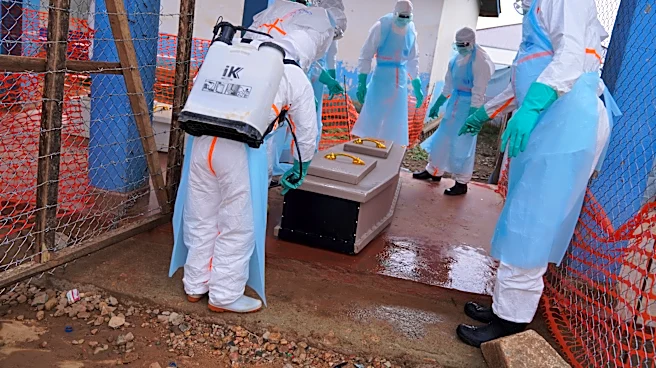
The World Food Programme (WFP) has emphasized the critical role of food assistance in containing the Ebola outbreak in the Democratic Republic of the Congo (DRC). The outbreak, declared in May, is the fastest-growing on record, with over 3,200 cases reported.
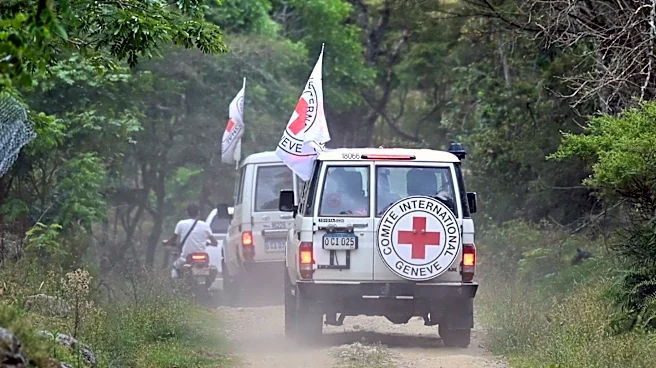
WFP's efforts include providing hot meals and dry food rations to affected populations, supporting safe isolation, and reducing the movement of people in search of food. The organization has also been involved in logistics and community support to strengthen containment efforts. WFP requires $293.6 million to sustain its operations in DRC over the next six months.
Why It's Important?
Food assistance is a vital component of the Ebola containment strategy, as it helps prevent the spread of the virus by encouraging affected individuals to remain in isolation. By addressing food insecurity, WFP is also reducing the risk of harmful coping strategies that could exacerbate the outbreak. The organization's logistical support is crucial for ensuring that health teams can operate effectively in challenging conditions. The need for substantial funding highlights the scale of the response required to manage the outbreak and prevent further spread, underscoring the importance of international support and collaboration.
What's Next?
WFP will continue to focus on scaling up its food assistance and logistical operations in DRC to address the ongoing Ebola outbreak. The organization will seek additional funding and resources to sustain its efforts and expand its reach to newly affected areas. Collaboration with other UN agencies, local authorities, and international partners will be essential to ensure a coordinated and effective response. WFP will also work to address challenges such as insecurity, access constraints, and community unrest, which complicate containment efforts and require adaptive strategies.