






What's Happening?
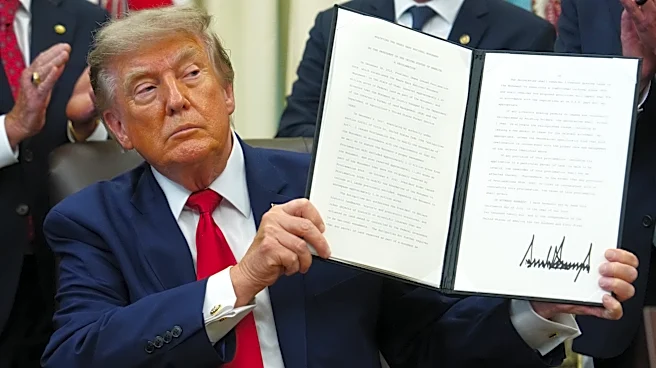
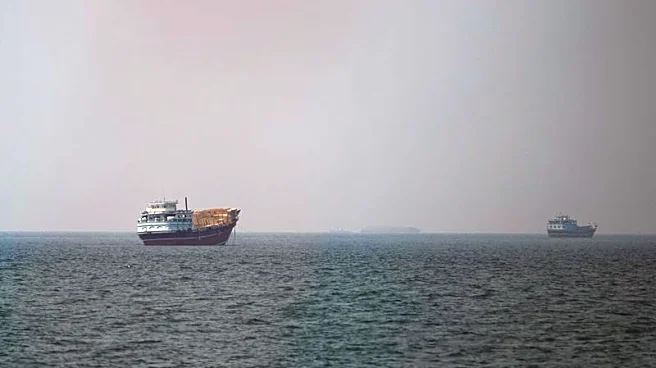
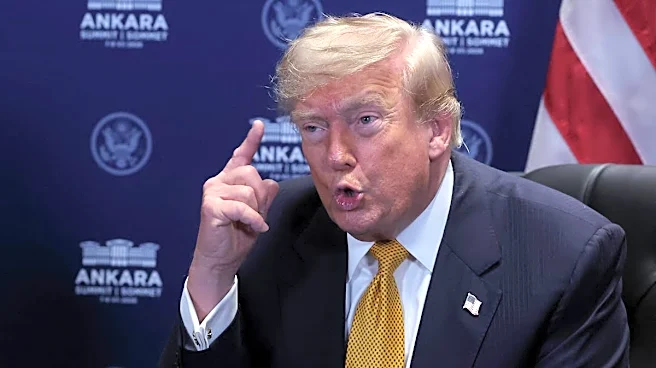
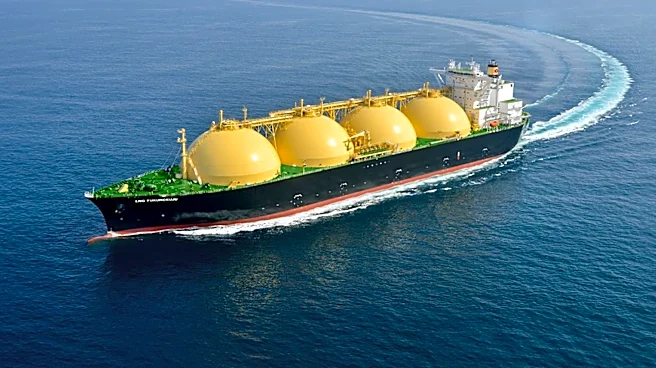
President Donald J. Trump has announced a new policy imposing a 20 percent toll on all cargo passing through the Strait of Hormuz. This decision is part of the United States' strategy to recoup costs associated with providing security in the region. The
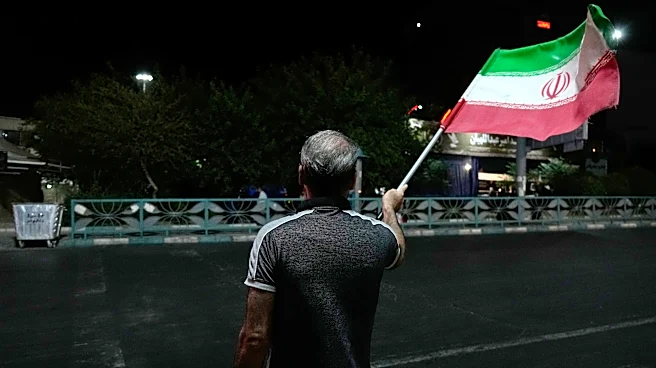
announcement was made via Trump's social media platform, Truth, where he emphasized that the strait remains open for international passage, despite tensions with Iran. The toll is intended to compensate the U.S. for its role as 'The Guardian of the Strait of Hormuz,' ensuring safe passage for global trade. This move comes amid ongoing conflicts involving Iran, Israel, and the U.S., with the U.S. reinstating an 'Iranian blockade' that restricts Iranian vessels and cargo. The toll policy is set to take effect immediately, as part of the U.S.'s broader security and economic strategy in the Middle East.
Why It's Important?
The imposition of a toll on cargo through the Strait of Hormuz by President Trump has significant implications for international trade and U.S. foreign policy. The strait is a critical maritime corridor for global oil and gas shipments, and the toll could affect shipping costs and international relations. By charging for security, the U.S. asserts its influence in the region, potentially altering trade dynamics and diplomatic relations with countries reliant on the strait for energy transport. This policy could lead to increased tensions with Iran and other nations, impacting global oil prices and economic stability. The decision underscores the U.S.'s strategic interests in maintaining control over key global trade routes and its willingness to leverage economic tools to assert its geopolitical stance.
What's Next?
Following the announcement, President Trump is scheduled to address the nation on July 16, where he may provide further details on the toll policy and its implications. The international community, particularly countries dependent on the Strait of Hormuz for energy supplies, will likely respond to this development. Potential diplomatic negotiations or disputes could arise as affected nations seek to mitigate the economic impact of the toll. Additionally, legal and logistical challenges may emerge as stakeholders assess the policy's compliance with international maritime law. The U.S. may also face domestic and international scrutiny over the decision, influencing future policy adjustments or diplomatic engagements.