






What's Happening?
The U.S. Coast Guard successfully rescued 16 individuals from the Pacific Ocean after their boat capsized approximately 140 miles off the coast of Baja California, Mexico. The rescue operation, which took place in the predawn hours of October 16, involved
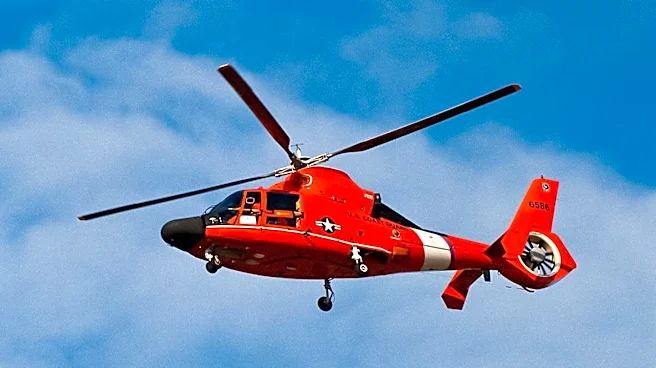
Coast Guard swimmer Josh Law, who personally saved 16 people over two hours. Three of the rescued individuals sustained injuries consistent with shark bites, requiring immediate life-saving first aid from the Coast Guard. The incident began with a mayday call around 1 a.m., prompting the deployment of a Coast Guard helicopter from Ventura, California. The pilot, Lt. Miyako Miller, navigated in darkness using night vision goggles and stars, eventually spotting a flicker of light from the survivors. The vessel's purpose and origin are under federal investigation, with U.S. Customs and Border Protection interviewing survivors. Nearly half of those rescued have since been returned to Mexico.
Why It's Important?
This incident highlights the critical role of the U.S. Coast Guard in maritime search and rescue operations, particularly in challenging conditions far from shore. The swift response and the bravery of personnel like Josh Law underscore the inherent dangers and complexities of such missions. The suspected shark bite injuries also bring attention to the natural hazards present in the Pacific Ocean, especially in areas known for marine life like Guadalupe Island, which is a biosphere reserve recognized for its great white shark population. Furthermore, the involvement of U.S. Customs and Border Protection and the return of some survivors to Mexico suggest potential implications related to immigration and border security, indicating that the capsized boat may have been involved in migrant smuggling. This event underscores the multifaceted challenges faced by authorities operating in international waters near the U.S. border.
What's Next?
A federal investigation is underway to determine the circumstances surrounding the capsized boat, including its origin and purpose. U.S. Customs and Border Protection will continue to process the survivors according to immigration laws, with further repatriations to Mexico possible. The U.S. Coast Guard, alongside Mexican authorities and the U.S. Navy, conducted an extensive search for 11 other individuals who were never found, covering over 2,441 square miles for 89 hours before calling off the search. The medical condition of the three individuals who suffered suspected shark bites will be monitored, and they will receive necessary ongoing care. This incident may also prompt discussions among maritime safety and immigration agencies regarding protocols for rescues involving potential migrant vessels and the associated risks, including environmental hazards like marine predators.
Beyond the Headlines
The rescue operation sheds light on the increasing trend of migrants resorting to perilous sea routes, often facilitated by smugglers, to bypass heavily guarded land borders. The remote location of the incident, far off the Mexican coast, indicates the extreme lengths individuals are willing to go, and the risks they face, including exposure to harsh marine environments and wildlife. The public's perception of such events can be complex, balancing humanitarian concerns for those in distress with national security and immigration enforcement priorities. The incident also serves as a stark reminder of the unpredictable nature of the ocean and the constant vigilance required from maritime rescue services. The long-term implications for the survivors, particularly those returned to Mexico, and the ongoing federal investigation into the vessel's activities, will continue to unfold.