


What's Happening?
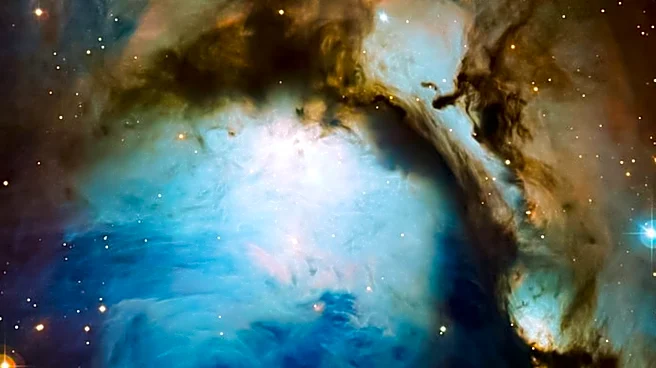
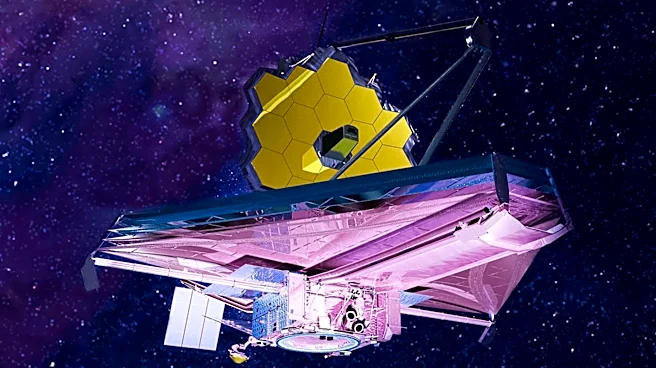
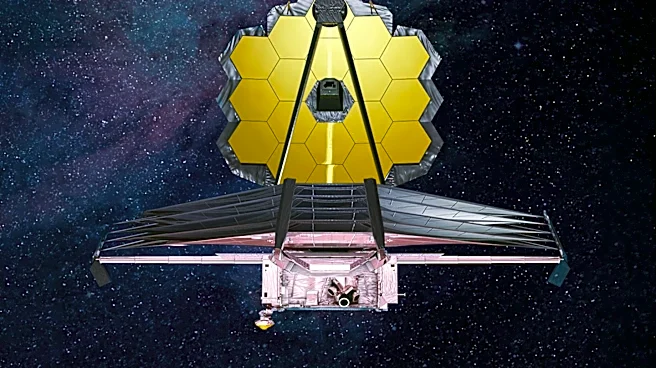
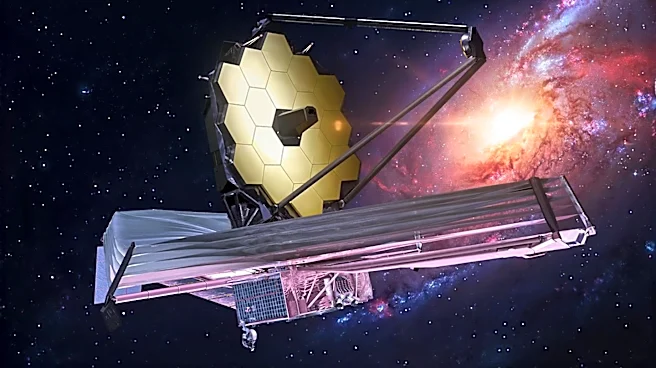
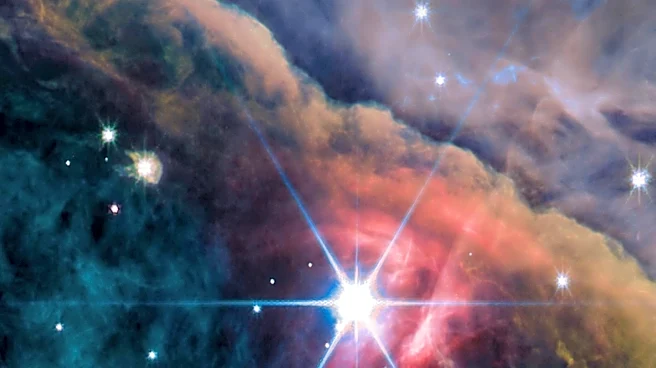
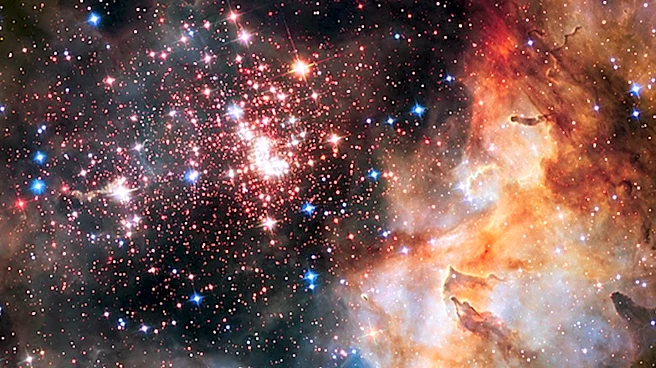
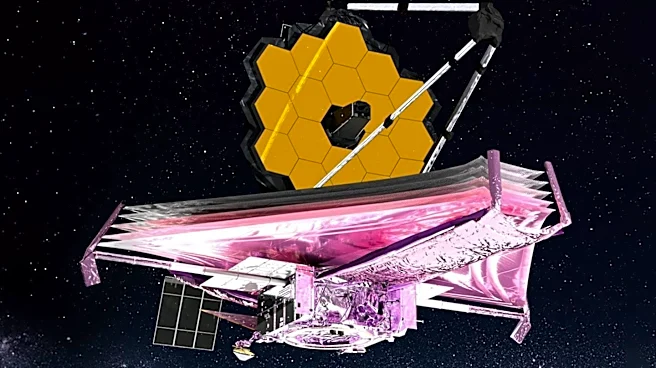
The James Webb Space Telescope has captured new, detailed images of the Lion Nebula (NGC 2392), providing insights into its structure and composition. Unlike previous images taken by the Hubble Space Telescope, Webb's infrared imaging highlights compact
clumps of dust and ionized gas. The nebula's distinct appearance is due to the remains of a dying star at its center, which continues to alter the nebula's components. The imagery from Webb 'freezes' the nebula in time, offering a snapshot of its ongoing transformation.
Why It's Important?
The detailed images from the James Webb Space Telescope enhance our understanding of planetary nebulae and the processes that shape them. By studying the Lion Nebula, astronomers can gain insights into the life cycle of stars and the evolution of galaxies. This knowledge contributes to the broader field of astrophysics and helps refine models of stellar and galactic development. The advancements in imaging technology demonstrated by Webb also pave the way for future discoveries in space exploration.
What's Next?
Astronomers will continue to analyze the data from the James Webb Space Telescope to further understand the Lion Nebula and other celestial phenomena. Ongoing observations will help refine theories about the formation and evolution of nebulae. As Webb continues its mission, it is expected to uncover more details about the universe, contributing to our understanding of cosmic history and the fundamental processes that govern it.