




What's Happening?
The Polish pavilion at the Venice Biennale 2026 is presenting an innovative audio-video installation titled 'Liquid Tongues,' created by Polish artists Bogna Burska and Daniel Kotowski. This project features a performance by the Chór w Ruchu (Choir in Motion),
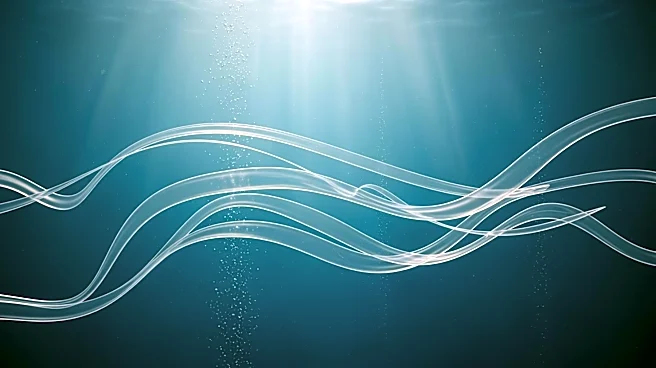
which includes both hearing and deaf performers. The content was recorded underwater in a Warsaw swimming pool, utilizing the unique acoustics and visual effects of the environment to explore alternative modes of communication inspired by whale songs. The installation is presented across two screens, one of which is suspended above visitors, creating an immersive experience. The project builds on previous performances by the choir and aims to highlight the effectiveness of sign language in environments where spoken language becomes distorted.
Why It's Important?
This installation is significant as it challenges traditional perceptions of communication by emphasizing the role of sign language in environments where spoken language is less effective. It highlights the inclusivity of deaf performers and the potential for art to bridge communication gaps. The project also reflects a shift in Poland's cultural representation at international events, moving away from nationalistic themes to more progressive and inclusive narratives. This could influence future cultural policies and artistic collaborations, promoting diversity and accessibility in the arts.
What's Next?
The installation is expected to attract attention from both art enthusiasts and advocates for inclusivity, potentially sparking discussions on the role of art in promoting social change. The success of 'Liquid Tongues' could lead to further collaborations between hearing and deaf artists, encouraging more inclusive practices in the art world. Additionally, the project may inspire other countries to explore similar themes in their cultural representations at international events.
Beyond the Headlines
The use of underwater filming in 'Liquid Tongues' not only serves an artistic purpose but also raises questions about the accessibility of art for diverse audiences. By creating a space where sign language is more effective than spoken language, the installation challenges societal norms and encourages a reevaluation of communication methods. This could lead to broader discussions on the importance of accessibility in public spaces and cultural institutions.