





What's Happening?
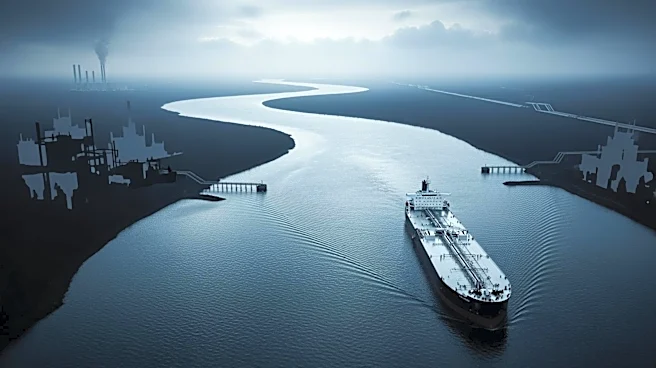
Six Iranian oil tankers have been forced to return to Iran due to a U.S. blockade, highlighting the ongoing impact of the U.S.-Israeli conflict with Iran on global oil routes. The blockade, announced by the U.S. on April 13, aims to restrict Iran-related
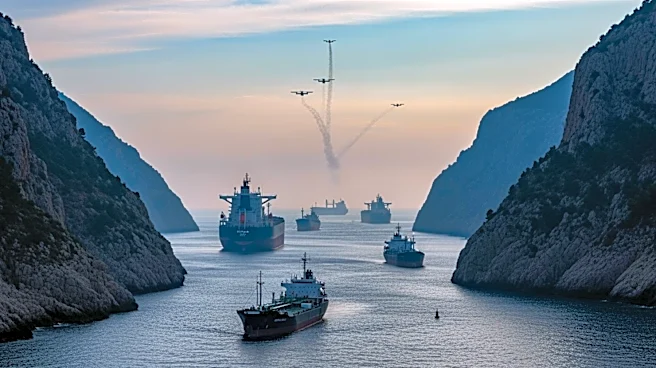
shipping through the Strait of Hormuz, a critical passage for global oil exports. According to ship-tracking data, the blockade has significantly reduced the number of ships passing through the strait, with only seven ships crossing in a recent day compared to the usual 125 to 140. The U.S. military has turned back 37 vessels since the blockade began, affecting the transport of an estimated 10.5 million barrels of oil. While some vessels have been allowed to continue their journey, others have been redirected, causing significant disruptions in the region.
Why It's Important?
The blockade of Iranian oil tankers by the U.S. has significant implications for global oil markets and geopolitical stability. The Strait of Hormuz is a vital corridor for the world's oil supply, handling about 20% of global oil and LNG exports. The disruption of this route could lead to increased oil prices and heightened tensions in the region. The blockade also affects hundreds of ships and approximately 20,000 seafarers, who face risks and psychological strain due to the ongoing conflict. The situation underscores the fragile nature of global energy security and the potential for regional conflicts to have widespread economic impacts.
What's Next?
The continuation of the U.S. blockade and Iran's restrictions on shipping through the Strait of Hormuz suggest prolonged disruptions in oil transport. As talks between Iran and the U.S. remain stalled, the potential for further escalation exists. The international community, including organizations like the International Maritime Organization, may increase pressure for a resolution to prevent environmental and safety risks associated with stranded vessels. The situation could also prompt discussions on alternative routes and strategies to mitigate the impact on global oil supply chains.