
What's Happening?
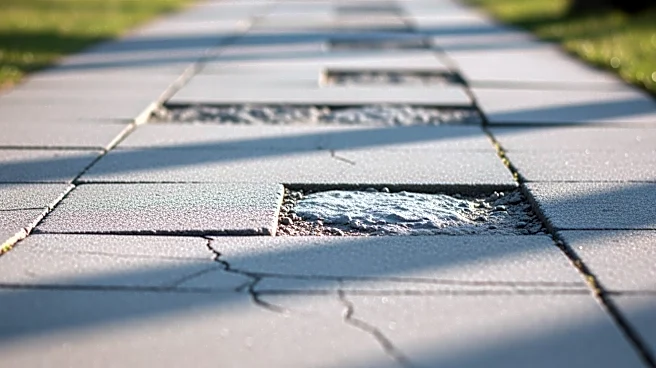
The city of Olympia, Washington, faces a daunting task of repairing nearly 28,000 damaged sidewalk sections, a project estimated to take over 100 years to complete. The city's Planning Commission has been
assessing the condition of its sidewalks, identifying 1,500 high-severity damage points primarily in downtown and nearby residential areas. Despite having a program and funding for new sidewalks, the city lacks sufficient resources for existing repairs. A capital program approved in 2024 allocates $500,000 annually for repairs, but the scale of the problem is vast. The city code currently holds property owners responsible for adjacent sidewalk maintenance, a policy that has proven difficult to enforce. Public feedback suggests prioritizing repairs near high-traffic pedestrian areas and shifting responsibility to larger property owners.
Why It's Important?
The extensive timeline for sidewalk repairs in Olympia highlights significant infrastructure challenges faced by many U.S. cities. The situation underscores the need for effective urban planning and resource allocation to maintain public safety and accessibility. The current approach places a financial burden on property owners, particularly small homeowners, which may not be sustainable or equitable. The city's efforts to gather public input and draft new policies reflect a move towards more inclusive and practical solutions. Addressing these infrastructure issues is crucial for ensuring safe pedestrian environments and supporting urban mobility.
What's Next?
Olympia's city staff plans to present a draft policy to the Land Use and Environment Committee on May 28, seeking feedback and recommendations for a council study session in July. The outcome of these discussions could lead to policy changes that redefine responsibility for sidewalk maintenance and potentially increase funding for repairs. The city may explore alternative funding sources or partnerships to expedite the repair process. Stakeholders, including residents and local businesses, will likely be engaged in ongoing discussions to develop a feasible and fair approach to addressing the city's infrastructure needs.