





What's Happening?
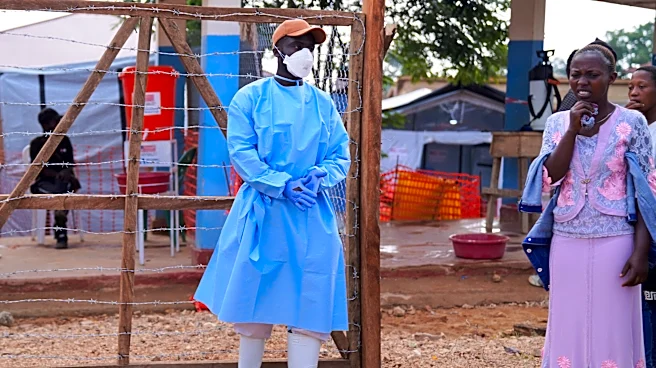
The World Health Organization (WHO) has reported a significant increase in Ebola infections in the Democratic Republic of the Congo, with confirmed cases reaching 3,200 and 1,405 deaths. The outbreak, primarily in the northeastern province of Ituri, is
attributed to the Bundibugyo strain of the Ebola virus. The WHO has highlighted challenges in containing the outbreak, including its spread to five provinces and disruptions caused by healthcare worker strikes. Efforts to combat the outbreak include the initiation of vaccine trials, with Oxford University administering an experimental vaccine to the first volunteer. Additional vaccine candidates are set for accelerated clinical trials, and researchers are developing potential treatments.
Why It's Important?
The Ebola outbreak in the Democratic Republic of the Congo poses a significant public health challenge, with potential implications for global health security. The high fatality rate and the virus's spread to multiple provinces underscore the urgency of effective containment measures. The initiation of vaccine trials represents a critical step in addressing the outbreak, offering hope for controlling the virus's spread. Successful vaccine development could prevent future outbreaks and save lives, while failures could prolong the epidemic and increase mortality. The situation highlights the need for robust healthcare systems and international cooperation in managing infectious disease outbreaks.
What's Next?
The ongoing vaccine trials and development of treatments are crucial next steps in combating the Ebola outbreak. The success of these efforts could lead to widespread vaccination and treatment availability, potentially curbing the epidemic. However, challenges such as healthcare worker strikes and logistical issues in vaccine distribution may hinder progress. Continued international support and funding will be essential to sustain containment efforts and ensure that healthcare systems in affected regions can manage the outbreak effectively. Monitoring the situation closely will be vital to adapting strategies and ensuring timely responses to emerging challenges.