
What's Happening?
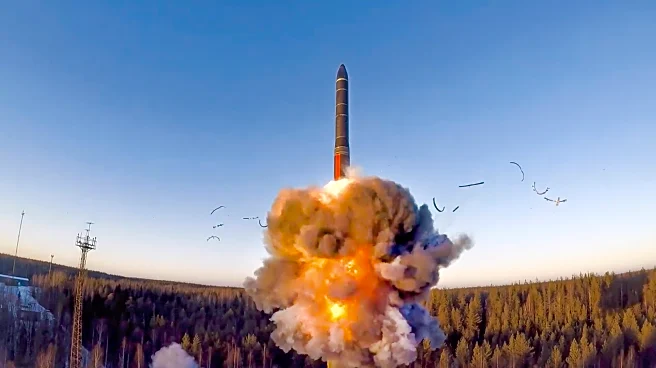
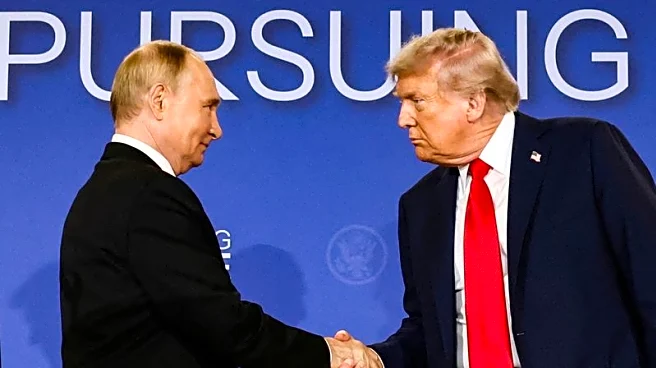
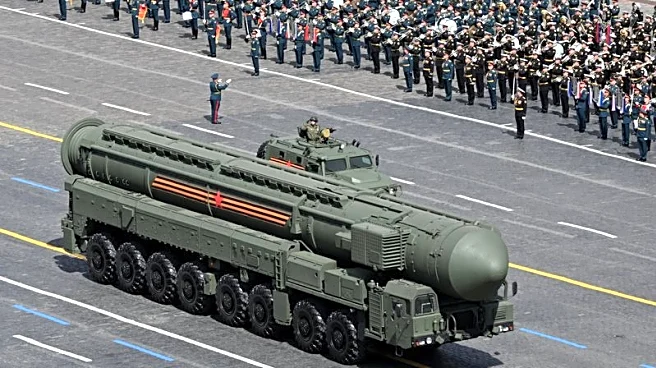
The Kremlin has announced that President Trump has not yet responded to Russian President Vladimir Putin's proposal to extend the New START treaty, which is set to expire in February. The treaty, which limits strategic nuclear weapons, has been a cornerstone
of nuclear arms control between the U.S. and Russia. Russia had previously suspended its participation in the treaty's verification processes in February 2023 amid rising tensions with NATO over the conflict in Ukraine. Despite this, Russia has not fully abandoned the treaty. Putin has suggested a voluntary one-year extension of the treaty's restrictions on strategic nuclear arsenals, inviting the U.S. to reciprocate. The White House, however, has indicated that it may not extend the current treaty, with President Trump stating that if it expires, a better agreement could be negotiated.
Why It's Important?
The potential expiration of the New START treaty raises significant concerns about global nuclear stability. The treaty is crucial for maintaining limits on the world's two largest nuclear arsenals, those of the U.S. and Russia. Its expiration without a replacement could lead to an arms race, increasing the risk of nuclear conflict. The treaty's verification processes are vital for ensuring compliance and building trust between the two nations. The geopolitical tensions surrounding the Ukraine conflict further complicate negotiations, as both countries are on opposing sides. The outcome of this situation could have profound implications for international security and arms control efforts.
What's Next?
As the expiration date of the New START treaty approaches, diplomatic efforts may intensify to either extend the current agreement or negotiate a new one. The U.S. and Russia will need to engage in complex negotiations to address mutual concerns and reach a consensus. The international community will be closely monitoring these developments, as the outcome will impact global nuclear arms control frameworks. Potential reactions from NATO and other global powers could influence the direction of these negotiations, as they seek to maintain strategic stability and prevent an escalation of nuclear tensions.