









What's Happening?
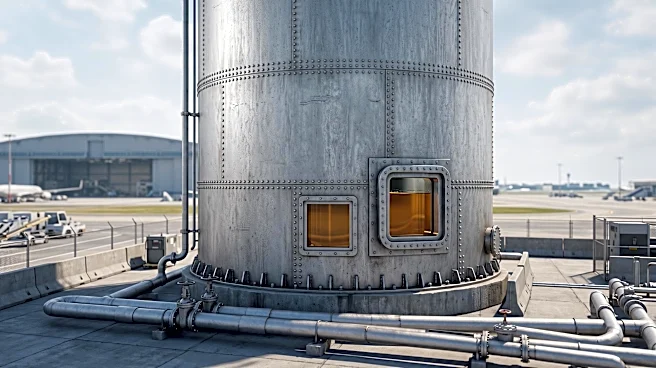
Switzerland has once again drawn upon its strategic reserves to ensure the supply of jet fuel at Zurich and Geneva airports. The Delegate for National Economic Supply authorized the release of up to 50,000 cubic meters of jet fuel by the end of November.
This marks the second time in a few weeks that strategic reserves have been utilized for jet fuel, following an initial release of 30,000 cubic meters in October for Zurich Airport. The Federal Office for Economic Supply (BWL) attributes the shortage to restrictions at refineries in southern France and Germany, as well as disruptions in rail services. These issues have made the airports reliant on supplies from warehouses, despite November typically being a period of low demand. Overall, 17.4% of Switzerland's mandatory aviation fuel reserves have now been drawn down since September, with the Delegate having the authority to approve withdrawals up to 20% independently.
Why It's Important?
While this event directly impacts Switzerland, it highlights the fragility of global supply chains and the critical role of strategic reserves in mitigating disruptions, a lesson relevant to the U.S. and other nations. The U.S. also maintains strategic petroleum reserves, and their management is crucial for national economic stability. The Swiss situation underscores how regional disruptions, such as refinery issues and transportation limitations, can quickly necessitate tapping into emergency stockpiles. For the U.S., this serves as a reminder of the importance of maintaining robust domestic refining capacity and diverse transportation networks to prevent similar vulnerabilities. The reliance on strategic reserves, even for a specific product like jet fuel, indicates underlying systemic pressures in the energy market that could affect any country dependent on imported or complex supply chains.
What's Next?
The immediate next step for Switzerland involves managing the released jet fuel to ensure continued airport operations through November. The Federal Office for Economic Supply will likely continue to monitor the situation closely, assessing the impact of ongoing restrictions at refineries and rail service disruptions. Should these issues persist or worsen, further withdrawals from strategic reserves might be necessary, potentially exceeding the Delegate's independent approval limit and requiring broader governmental authorization. Longer-term, Switzerland may explore strategies to enhance the resilience of its jet fuel supply chain, possibly through diversifying import routes or increasing domestic storage capacity. The broader international community, including the U.S., will observe these developments as a case study in managing energy supply vulnerabilities.
Beyond the Headlines
This situation in Switzerland points to a deeper vulnerability in modern economies: the intricate and often fragile nature of critical supply chains. The reliance on strategic reserves, while effective in the short term, is not a sustainable long-term solution to persistent supply issues. It highlights the need for nations to re-evaluate their energy security strategies, moving beyond just crude oil reserves to include refined products like jet fuel and diesel. The disruptions stemming from refinery problems and rail services also underscore the interconnectedness of infrastructure and the cascading effects when one component fails. This could prompt a broader re-assessment of infrastructure resilience and investment in alternative transportation methods or localized production capabilities to reduce dependence on vulnerable global supply lines. The ethical dimension arises in balancing the immediate economic need for fuel with the long-term sustainability of strategic reserves.