





What's Happening?
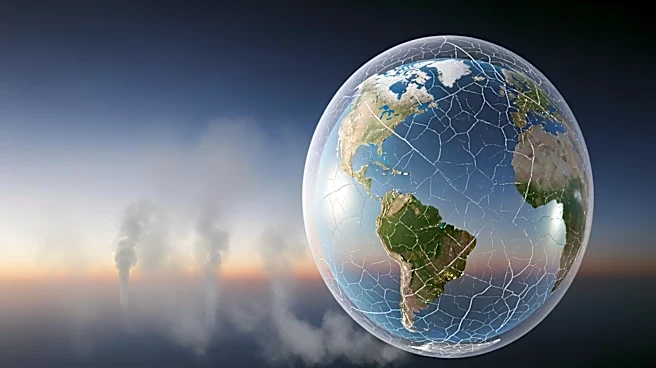
Recent research has revealed that industrial chemicals, specifically carbon tetrachloride and certain chlorofluorocarbons, are significantly delaying the recovery of the ozone layer. These chemicals, used as feedstocks in the production of modern refrigerants
and plastics, are escaping into the atmosphere at rates much higher than previously estimated. A study published in Nature Communications indicates that about three to four percent of these chemicals leak during production and processing, contributing to ozone depletion. The study, led by atmospheric scientist Stefan Reimann, suggests that the ozone layer's recovery could be delayed by seven years if current emission levels persist.
Why It's Important?
The findings underscore the dual environmental threat posed by these chemicals, which not only deplete the ozone layer but also act as potent greenhouse gases. The delay in ozone recovery could have significant implications for global climate patterns and human health, as the ozone layer plays a crucial role in protecting the Earth from harmful ultraviolet radiation. The study highlights the need for stricter regulations and international cooperation to reduce emissions, which could also mitigate climate change impacts. The Montreal Protocol, a successful international treaty, may need to be revisited to address these new challenges.
What's Next?
The study calls for potential policy changes, including binding emission limits or restrictions on particularly harmful substances. The international community may need to strengthen existing agreements like the Montreal Protocol to incorporate new scientific findings. Continued collaboration between scientists, policymakers, and industry leaders is essential to address these environmental challenges effectively.
Beyond the Headlines
The research highlights the complexity of balancing industrial growth with environmental sustainability. As industries continue to rely on these chemicals for production, finding alternatives that do not harm the ozone layer or contribute to climate change is crucial. This situation also raises ethical questions about the responsibility of industries and governments to prioritize environmental health over economic gains.