


What's Happening?
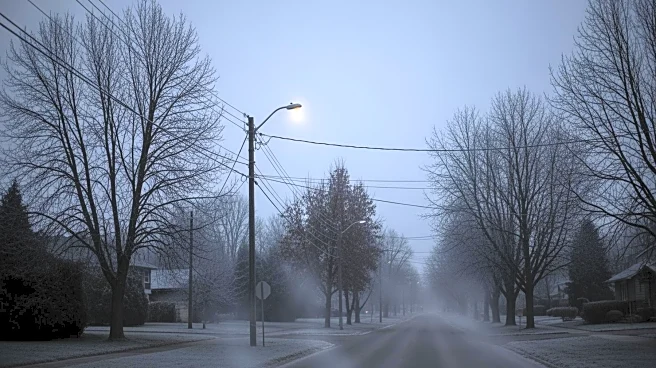
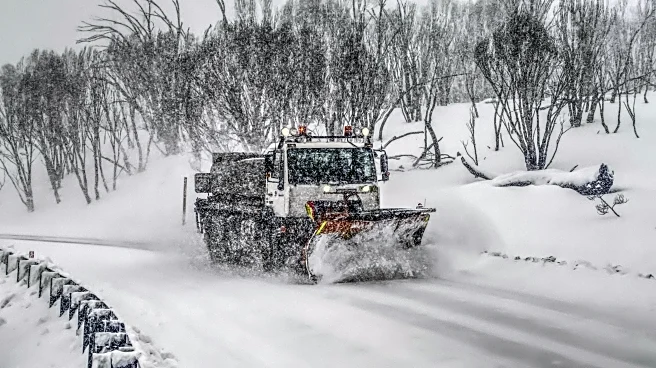
A powerful winter storm, classified as a bomb cyclone, is impacting the U.S. East Coast, bringing severe cold and heavy snow to several states. The National Weather Service (NWS) has issued snow and cold alerts, with the storm expected to push freezing
temperatures as far south as Florida. The cyclone, which intensified rapidly, has already dropped more than a foot of snow in parts of North Carolina and is causing near blizzard conditions in coastal areas from South Carolina to Virginia. The storm's rapid intensification, known as bombogenesis, occurs when a cyclone's central pressure drops significantly within 24 hours, leading to damaging winds and coastal flooding.
Why It's Important?
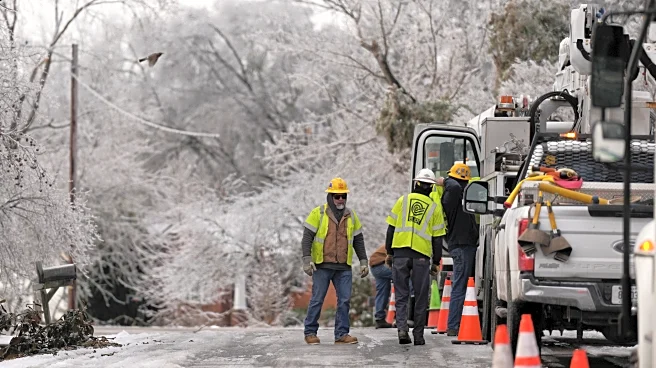
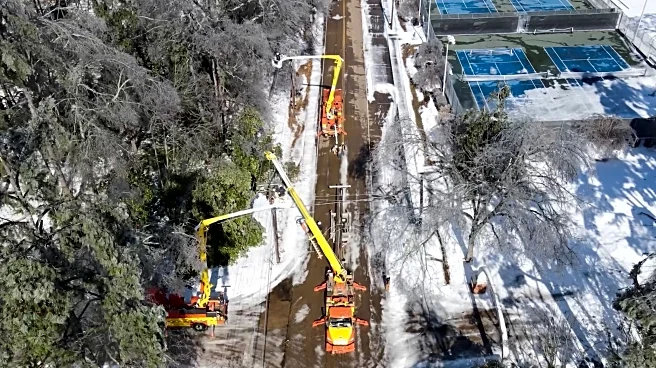
The bomb cyclone's impact is significant due to its potential to disrupt daily life and infrastructure across the affected regions. The severe weather conditions pose risks such as power outages, travel disruptions, and health hazards like frostbite and hypothermia. The storm's reach into southern states, including Florida, which rarely experience such cold, highlights the unusual nature of this weather event. The economic implications are also notable, as businesses and transportation networks may face interruptions, affecting local economies and potentially leading to increased costs for heating and emergency services.
What's Next?
As the storm continues to move up the East Coast, it is expected to gradually weaken, with winds easing by Sunday night. However, the cold air mass will persist, maintaining freezing temperatures in the affected areas. Authorities are likely to continue monitoring the situation closely, issuing further warnings and advisories as needed. Residents in the impacted regions are advised to take precautions against the cold and to stay informed about local weather updates. The response from emergency services and local governments will be crucial in managing the storm's aftermath and ensuring public safety.